A fire extinguisher ball is a self-activating fire suppression device designed to burst automatically when it comes into direct contact with flames. Unlike conventional extinguishers, it does not require pins, pressure handling, or trained operation, making it useful during panic situations or in unmanned areas. It is commonly used in homes, kitchens, electrical rooms, vehicles, shops, warehouses, and factory sections where fires can start suddenly without immediate human response.
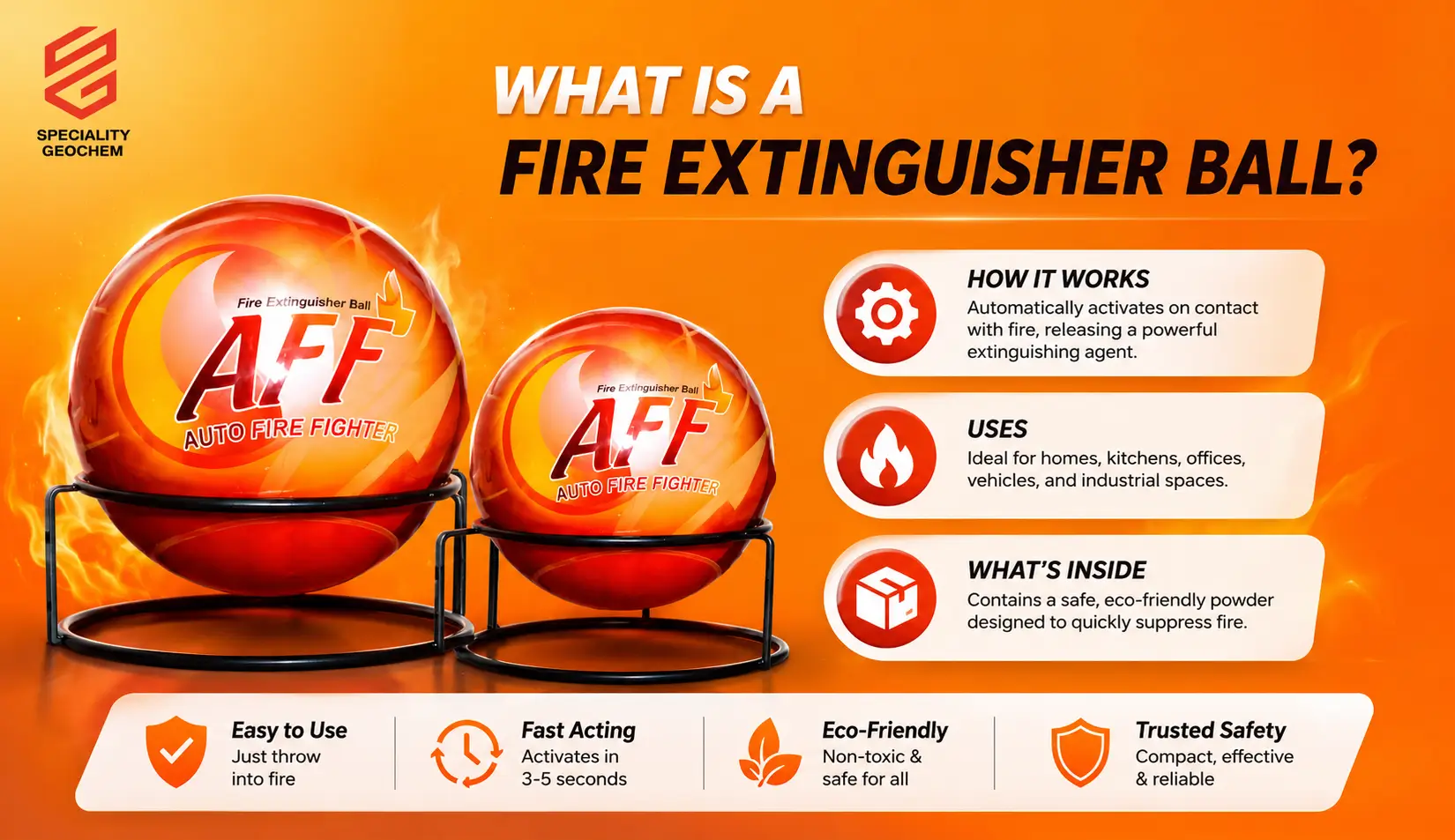
Most models weigh around 1.3 kg and activate within 3 to 5 seconds of flame contact. Once triggered, the ball disperses dry chemical powder across a 3 to 5 square meter area to suppress Class A, B, C, and E fires. In India, automatic fire extinguisher ball systems are increasingly used as a secondary layer of protection alongside conventional fire safety equipment.
What is a Fire Extinguisher Ball?
A fire extinguisher ball is a lightweight spherical fire suppression device filled with dry chemical powder, usually monoammonium phosphate (MAP), the same extinguishing compound used in standard ABC extinguishers. The ball is designed to activate automatically when exposed directly to flames, typically within 3 to 5 seconds of contact. Once activated, the outer shell ruptures and releases extinguishing powder in all directions.
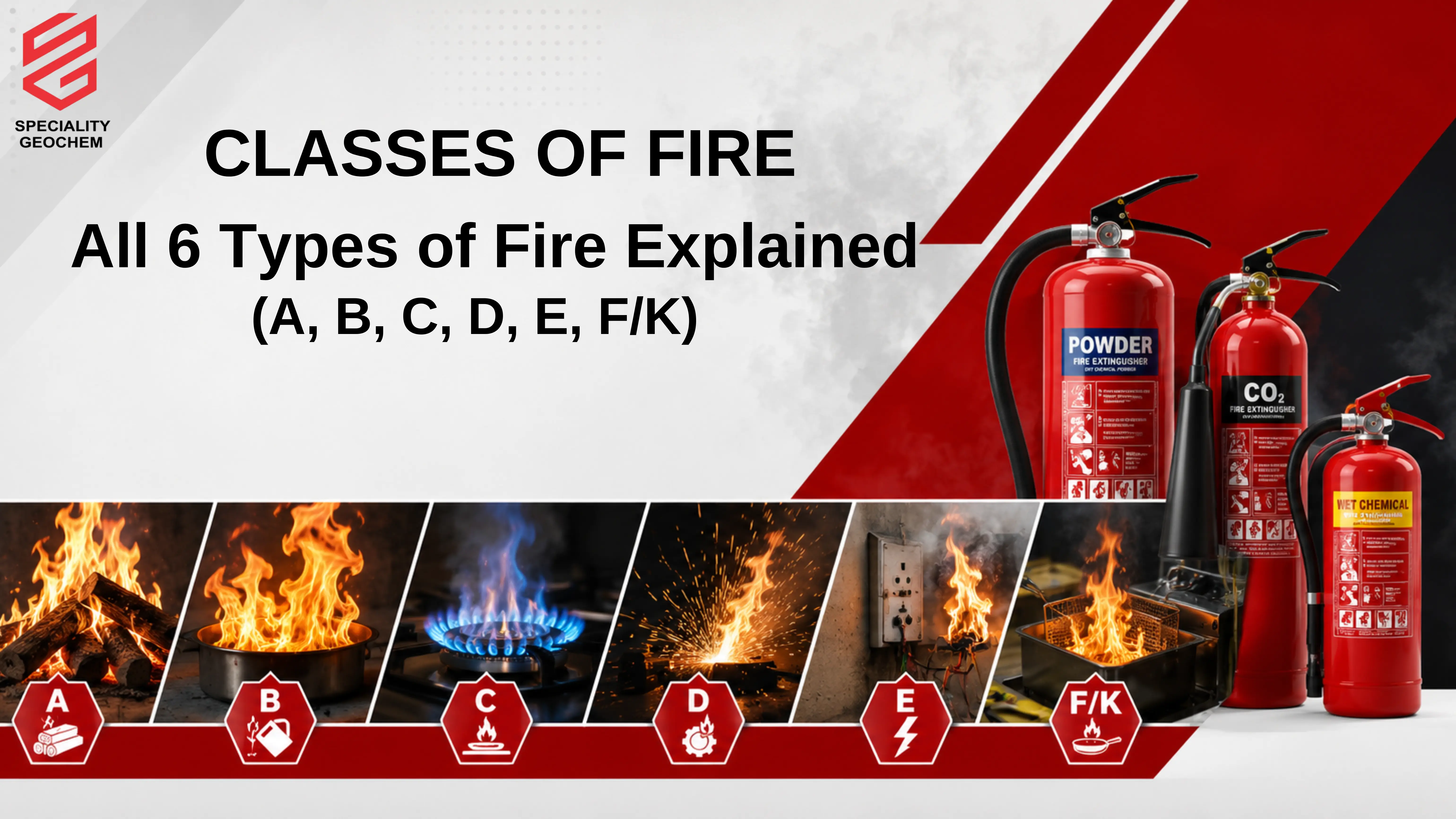
Most units weigh approximately 1.3 kg and provide effective coverage across 3 to 5 square meters. These devices are commonly used for Class A fires involving paper, cloth, wood, and plastics, Class B fires involving flammable liquids, Class C fires involving gases, and Class E electrical appliance fires.
Unlike traditional extinguishers that require manual operation, a fire ball extinguisher can function even when no person is present nearby. This makes it especially useful for electrical panels, server rooms, storage areas, kitchens, and parked vehicles.
Speciality Geochem manufactures the AFF and AFS Fire Extinguisher Ball in India using tested fire suppression compounds and quality-controlled production aligned with BIS and ISO fire safety standards.
How Does a Fire Extinguisher Ball Work?
The working principle is simple, but the chemistry behind it is highly effective. A fire extinguisher ball how it works process depends on direct flame contact and rapid powder dispersion.
- The outer shell reacts to direct flames
The heat-sensitive shell weakens and ruptures only when flames physically touch the surface. It does not activate merely from surrounding heat at a distance. - The internal trigger disperses extinguishing powder
Once activated, the ball bursts and spreads dry chemical powder outward in all directions across the affected area. - The chemical interrupts combustion
Monoammonium phosphate interferes with the fire triangle by reducing oxygen availability, cooling burning material, and disrupting the chemical chain reaction that sustains flames.
The activation usually produces a loud popping sound. That sound serves two purposes. First, it confirms the suppression system has activated. Second, it alerts nearby occupants that a fire incident has started, which can be critical during nighttime or in low-occupancy industrial spaces.
The extinguishing compound inside most AFF fire extinguisher ball products is monoammonium phosphate, commonly abbreviated as MAP. This yellow dry chemical powder is widely used in ABC fire extinguishers because it can suppress multiple classes of fire using a single agent.
When dispersed, the powder forms a protective coating over burning surfaces. This coating slows oxygen transfer while simultaneously interrupting combustion chemistry. Since the powder spreads radially, the ball works best when installed close to likely ignition points such as electrical distribution boards, machinery corners, fuel storage sections, inverter rooms, or vehicle engine compartments.
One important technical point is often misunderstood. An automatic fire extinguisher ball does not function like a smoke detector or heat alarm. It requires actual flame contact to activate. If a room becomes hot without visible flames reaching the device, activation will not occur.
Where Can a Fire Extinguisher Ball Be Used?
A fire extinguisher ball India market sees strong demand from both residential and industrial sectors because the device can protect spaces where fires begin unnoticed.
Homes and kitchens
Cooking oil flare-ups, inverter sparks, and LPG-related incidents can escalate quickly in residential spaces where people panic during emergencies.
Electrical panels and server rooms
Electrical fires often start silently behind panels and wiring systems where no one is present to operate a manual extinguisher.
Vehicles and car dashboards
Short circuits, battery failures, and fuel leaks inside parked vehicles can spread rapidly before drivers notice smoke.
Warehouses
Storage facilities containing packaging material, chemicals, textiles, or cartons benefit from automatic suppression near ignition points.
Factories and production units
Machinery overheating, welding sparks, and electrical overloads create localized fire risks inside manufacturing plants.
Schools and hospitals
These facilities need quick first-response suppression tools because evacuation speed is critical in occupied buildings.
Retail shops and commercial counters
Small shops with overloaded wiring, decorative lighting, and compact layouts often lack advanced suppression systems.
Garages and workshops
Fuel vapors, lubricants, batteries, and welding activity increase the likelihood of sudden Class B and electrical fires.
Unmanned areas gain the most practical advantage from this technology. A fire can begin at 2 a.m. inside a storage room, electrical chamber, or closed shop, and the device can still activate without waiting for human intervention.
Businesses commonly combine these products with larger suppression systems and manual extinguishers for layered protection. You can also explore additional fire fighting equipment used across industrial and commercial facilities.
Fire Extinguisher Ball vs Traditional Fire Extinguisher
A fire extinguisher ball solves a different problem than a conventional extinguisher. One focuses on automatic localized response, while the other provides active manual firefighting capability.
Traditional extinguishers remain mandatory under Indian fire safety regulations and are far more effective for controlling larger fires. The ball works best as a supplementary protection layer rather than a complete replacement.
| Feature | Fire Extinguisher Ball | Traditional Extinguisher |
|---|---|---|
| Activation | Automatic on direct flame contact | Manual operation required |
| Training Required | Minimal to none | User must know PASS method |
| Weight | Approx. 1.3 kg | Usually 4 kg to 9 kg |
| Coverage | 3 to 5 sq meters | Can cover larger fire zones |
| Maintenance | Typically maintenance-free | Requires periodic servicing |
| Shelf Life | Approx. 5 years | Depends on refill and maintenance schedule |
| Suitable For Unmanned Areas | Yes | No |
| Cost Over Time | Low maintenance cost | Recurring servicing and refilling costs |
The biggest advantage of the ball is immediate automatic response in small enclosed spaces. The biggest advantage of a traditional extinguisher is controlled firefighting capability over larger areas with targeted discharge.
Fire Extinguisher Ball Specifications
The AFF fire extinguisher ball manufactured by Speciality Geochem is designed for compact automatic fire suppression in residential, commercial, and industrial applications.
- Weight: 1.3 kg
- Diameter: Approximately 150 mm
- Activation: Direct flame contact within 3 to 5 seconds
- Coverage Area: 3 to 5 square meters
- Chemical Agent: Monoammonium Phosphate (MAP)
- Fire Classes: A, B, C, E
- Shelf Life: Up to 5 years with no routine maintenance required
- Manufacturer: Speciality Geochem, Udaipur, India, established in 1996
The product is manufactured under controlled quality processes with BIS and ISO compliance standards relevant to fire suppression products in India. Businesses looking for an experienced fire extinguisher ball manufacturer often use these devices alongside conventional extinguishing systems in electrical and machinery risk zones.
Limitations of Fire Extinguisher Balls (Honest Assessment)
A single fire extinguisher ball cannot control a large warehouse fire, an outdoor blaze, or a rapidly spreading industrial incident across open space. Its effective suppression zone is limited to approximately 3 to 5 square meters around the activation point.
Another important limitation is activation dependency. The device requires direct flame contact and will not trigger simply because a room becomes hot or smoky from a distance.
Indian fire safety codes still require conventional extinguishers, alarms, hydrant systems, and evacuation planning where applicable. The ball works best as an early-response suppression layer placed near likely ignition sources rather than as the only fire protection system in a building.
FAQ — Fire Extinguisher Ball
Q1: What is a fire extinguisher ball and how does it work?
A fire extinguisher ball is a spherical automatic fire suppression device filled with dry chemical powder such as monoammonium phosphate. It activates automatically within 3 to 5 seconds when flames directly touch its surface and disperses powder to suppress Class A, B, C, and E fires.
Q2: Is a fire extinguisher ball safe to use at home?
A fire extinguisher ball is generally considered safe for residential use when installed according to manufacturer instructions. It is commonly placed in kitchens, inverter rooms, garages, and near electrical panels because it activates automatically without requiring manual handling during emergencies.
Q3: How long does a fire extinguisher ball last?
Most standard fire extinguisher ball products have a shelf life of approximately 5 years. Maintenance requirements are minimal compared to traditional extinguishers, although periodic visual inspection is still recommended to check for physical damage.
Q4: What types of fire can a fire extinguisher ball put out?
Most AFF fire extinguisher ball products are designed for Class A, B, C, and E fires. This includes fires involving paper, wood, plastics, flammable liquids, gases, and energized electrical appliances.
Q5: Can a fire extinguisher ball replace a traditional fire extinguisher?
A fire extinguisher ball should not replace a traditional extinguisher in buildings where manual firefighting equipment is required under Indian fire safety regulations. It works best as a supplementary first-response tool for unmanned areas, vehicles, electrical sections, and localized fire risks.
Conclusion
A fire extinguisher ball makes the most sense in spaces where fires may start before anyone notices them. Electrical panels, parked vehicles, server rooms, storage sections, compact homes, and machinery corners are practical installation points because the device activates automatically without waiting for human action.
Speciality Geochem has been manufacturing fire safety products in India since 1996 and supplies fire suppression solutions for industrial and commercial applications across multiple sectors.