
Trusted Fire Hydrant System in India | Speciality Geochem
Factories, warehouses, hospitals, malls, hotels, IT parks, and high-rise buildings depend on these systems for life safety, insurance compliance, and fire department clearance. This page explains hydrant system types, IS codes, installation requirements, pricing, maintenance, and how Speciality Geochem handles complete execution from design to NOC clearance.
What is a Fire Hydrant System?
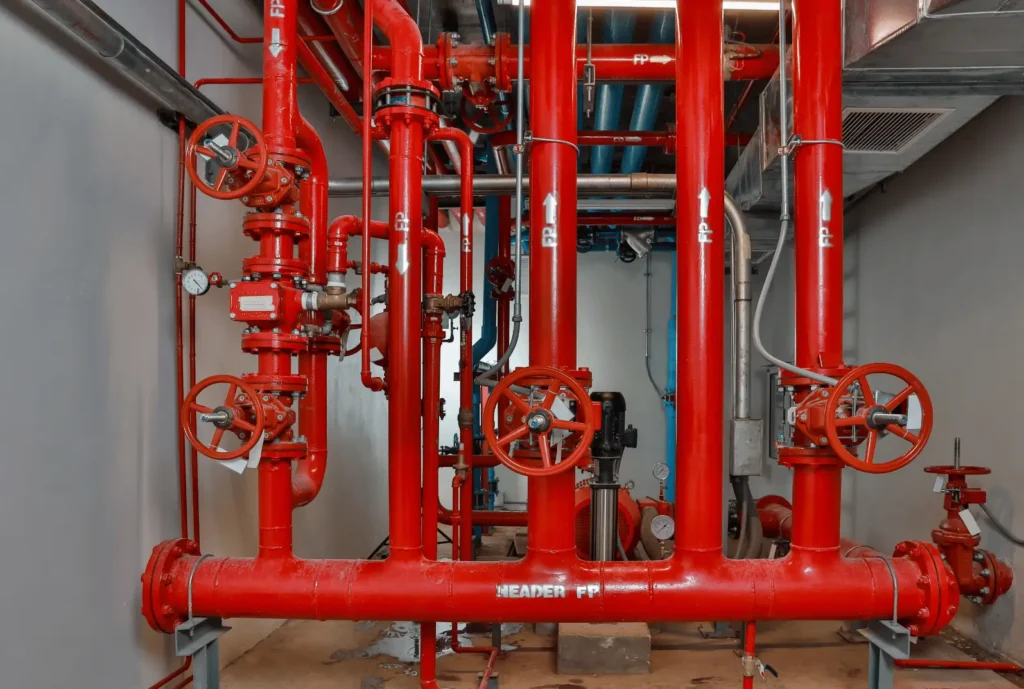
A fire hydrant system is a dedicated firefighting network designed to supply high-pressure water during fire emergencies in residential, commercial, and industrial buildings. The system combines fire pumps, pipelines, landing valves, hose reels, hydrant outlets, and water storage tanks to control large fires quickly before they spread. As per IS 908:2019 and NBC Part 4 (2016), hydrant systems must maintain specific flow and residual pressure standards for effective firefighting and fire NOC compliance. High-rise buildings, factories, warehouses, hospitals, malls, and hotels across India rely on these systems because portable fire extinguishers alone cannot handle large-scale fire incidents.
Fire Hydrant System Key Technical Specs
| Specification | Value / Standard |
|---|---|
| Minimum flow rate | 450 LPM to 2280 LPM |
| Minimum residual pressure at top outlet | 3.5 kg/cm² |
| Hydrostatic test pressure | 1.5 times working pressure for 2 hours |
| Pump types required | Jockey pump, main electric pump, diesel standby pump |
| Governing standards | IS 908:2019, IS 5290, NBC Part 4 (2016), TAC |
| Minimum pipe diameter | 100mm MS ERW pipe as per IS 1239 |
How Does a Fire Hydrant System Work?
A fire hydrant system works by delivering pressurised water from a dedicated source directly to the fire location through hydrant outlets and hose pipes. Water flows from the underground sump or municipal supply through suction pipes into the main fire pump, then moves through delivery pipes and riser lines to landing valves installed across the building. The jockey pump maintains standing pressure inside the network at all times, while the main fire pump activates automatically when pressure drops after a hydrant valve opens. According to NBC Part 4 (2016), the system must maintain a minimum residual pressure of 3.5 kg/cm² at the topmost hydrant outlet for effective firefighting.
Types of Fire Hydrant System in India
India primarily uses wet riser, dry riser, yard hydrant, underground hydrant, wet barrel, and dry barrel systems depending on building type and climate conditions.
| System Type | Where It Is Used | Water in Pipes | Key Requirement | Governing Standard |
|---|---|---|---|---|
| Wet Riser | Buildings above 15 metres | Always pressurised | Landing valve at every floor | NBC Part 4, IS 5290 |
| Dry Riser | Buildings up to 15 metres | Empty until used | Inlet breeching at ground level | NBC Part 4 |
| Yard Hydrant | Factories and campuses | Pressurised | 45 to 60 metre spacing | IS 908:2019 |
| Underground Hydrant | Public roads and urban zones | Pressurised | Surface access cover | IS 908:2019 |
| Wet Barrel | Warm regions | Always wet | Above 0°C use | IS 908:2019 |
| Dry Barrel | Cold regions | Dry until opened | Freeze protection | IS 908:2019 |
Wet Barrel vs. Dry Barrel — Which One for India?
Wet barrel hydrants keep water inside the hydrant body continuously and remain the standard choice across most Indian states where temperatures stay above freezing. Firefighters access water instantly by opening the outlet valve.
Dry barrel hydrants store water below the frost line and keep the upper barrel dry during standby conditions. This design prevents freezing damage in colder regions like Himachal Pradesh, Jammu and Kashmir, Ladakh, and parts of Uttarakhand.
Both systems comply with IS 908:2019 standards. Most Indian installations use wet barrel systems because warm climate conditions make freeze protection unnecessary in the majority of cities and industrial regions.
Key Components of a Fire Hydrant System
A fire hydrant system depends on coordinated components that maintain water pressure, deliver firefighting flow, and ensure operational reliability during emergencies.
Fire Hydrant Valve (Landing Valve)
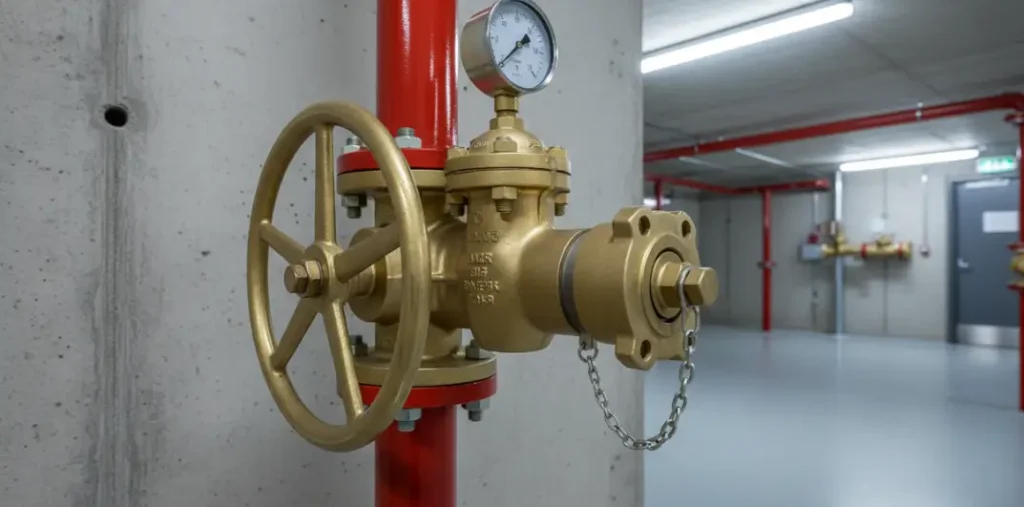
Controls water discharge during firefighting operations through 63mm or 80mm IS 5290 compliant outlets. Installed near staircases for quick emergency hose connection access.
Fire Pumps (Main, Jockey, Diesel)
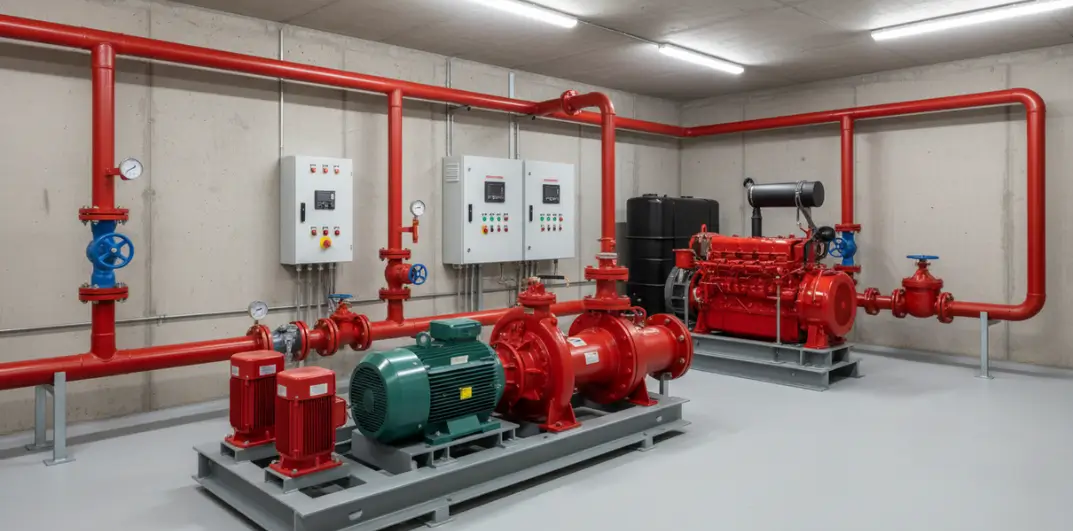
Maintains system pressure and supplies high-flow firefighting water during emergencies. Includes electric main pump, jockey pump, and diesel backup as per NBC requirements.
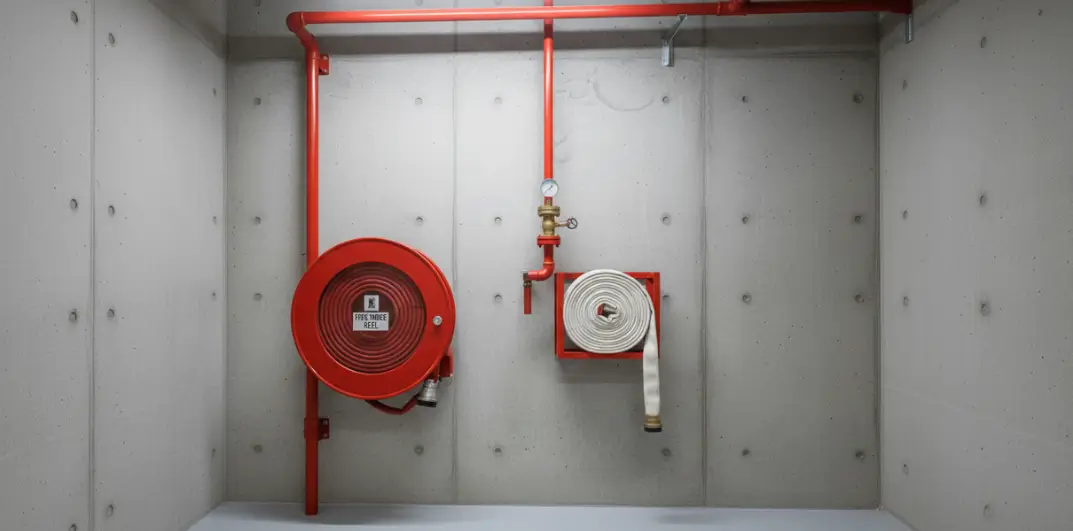
Fire Hose and Hose Reel
Delivers pressurised water directly to the fire location through IS-certified hoses and reels. Hose reels support first-response firefighting before emergency teams arrive.
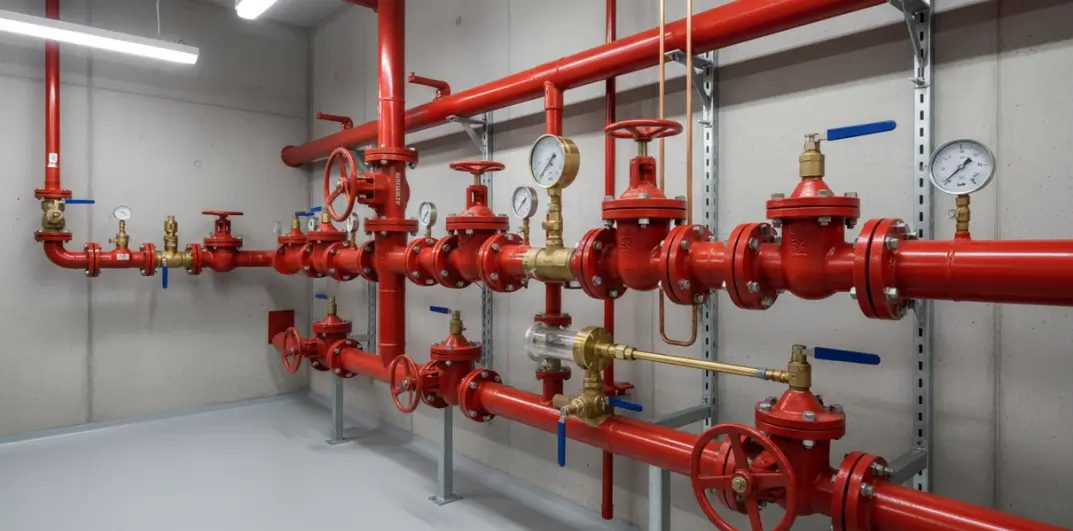
Suction and Delivery Pipes (MS ERW)
Carries water from underground tanks to hydrant outlets through IS 1239 compliant MS ERW pipelines. Proper pipe sizing prevents pressure loss across the network.
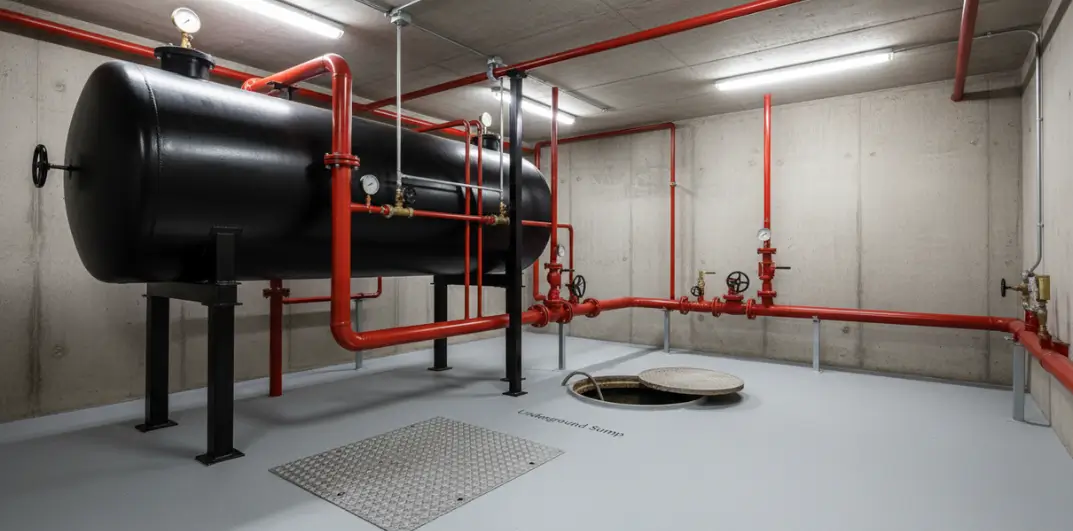
Header Tank and Underground Sump
Stores dedicated firefighting water reserve required for hydrant system operation and fire NOC compliance. Terrace tanks provide gravity-fed emergency backup during pump failure.
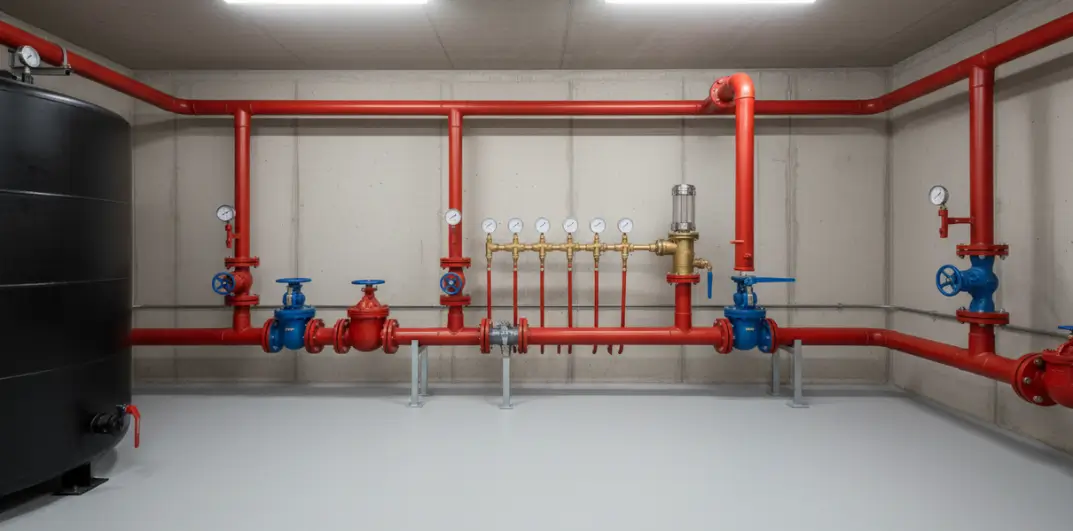
Pressure Gauge and Control Valves
Monitors pressure, releases trapped air, and prevents reverse water flow inside hydrant pipelines. These valves maintain stable system performance during firefighting operations.
Fire Hydrant System IS Code and NBC Compliance in India
Fire hydrant systems in India must comply with BIS standards, NBC Part 4 (2016), and TAC fire insurance regulations to qualify for fire NOC approval and safe building operation. IS 908:2019 governs hydrant specifications, while IS 5290 covers landing valves used in wet and dry riser systems. IS 884 and IS 636 define hose reel and fire hose standards, and IS 12469 specifies fire pump requirements. NBC Part 4 establishes mandatory rules for hydrant installation, water storage, pressure levels, and pump arrangements across residential, commercial, and industrial buildings. TAC regulations apply mainly to insurance compliance, especially in factories and warehouses where fire departments inspect hydrant systems before granting occupancy approval or renewing fire NOC certification.
| Standard / Requirement | Purpose | Key Technical Requirement |
|---|---|---|
| IS 908:2019 | Fire hydrant specifications | Covers pillar and underground hydrants, outlet size, pressure rating, and testing |
| IS 5290 | Landing valve standards | Governs 63mm and 80mm landing valves for wet and dry risers |
| IS 884 | Hose reel specification | Covers 19mm first-aid hose reels used near exits and staircases |
| IS 636 | Fire hose standard | Defines unlined fire hose pressure, flexibility, and durability |
| IS 12469 | Fire pump specification | Covers centrifugal pumps, diesel backup, suction, and delivery setup |
| IS 1239 | MS ERW firefighting pipes | Specifies wall thickness, coating, and pressure ratings |
| NBC Part 4 (2016) | Fire and life safety code | Defines hydrant requirement, water storage, pressure, and pump setup |
| TAC Regulations | Insurance compliance | Mandatory for industrial and warehouse fire insurance approval |
| Residential Buildings Above 15m | Wet riser mandatory | Minimum 50,000-litre fire water storage with jockey pump |
| Commercial Buildings | Wet riser + hose reel | 50,000 to 1,00,000 litres with diesel backup pump |
| Hospitals and Medical Buildings | Full hydrant coverage | Minimum 1,00,000-litre storage with all three pumps |
| Industrial Facilities | Yard hydrants mandatory | High-capacity pumps based on fire load calculation |
| Warehouses and Storage Units | External hydrant protection | Diesel standby pump and dedicated fire water reserve |
Fire Hydrant System Maintenance — Annual Checklist
A fire hydrant system requires scheduled testing and preventive maintenance to remain operational during emergencies.
Monthly Pressure Pump Test
Check jockey pump cut-in and cut-out pressure settings every month. Incorrect calibration causes unstable pressure levels and unnecessary pump cycling issues.
Quarterly Main Pump Test
Run the main electric pump in automatic and manual operating modes. Verify pressure build-up, vibration levels, and motor current during testing.
Diesel Backup Pump Check
Inspect engine oil, coolant level, battery voltage, fuel quantity, and auto-start functions monthly. Battery neglect causes most diesel pump failures.
Annual Hydrostatic Pressure Test
Test the complete hydrant pipeline network at 1.5 times working pressure for two hours. Record leakage points and pressure readings carefully.
Landing Valve Operation Check
Open and close all landing valves periodically to ensure smooth operation. Replace damaged washers and apply grease where maintenance is required.
Fire Hose Inspection Routine
Inspect hoses for cracks, fungus, abrasion, and coupling damage regularly. Replace weakened hoses immediately because burst hoses fail during emergencies.
Pressure Gauge Calibration Test
Verify pressure gauge accuracy annually to maintain reliable system readings. Faulty gauges create incorrect pump operation and unstable pressure monitoring.
Air Release Valve Inspection
Ensure air release valves function properly and remain free from rust buildup. Trapped air pockets reduce firefighting water flow efficiency significantly.
Fire Drill and NOC Inspection
Conduct mock fire drills every six months and maintain inspection records properly. Missing documents often delay annual fire NOC renewal approval.
Certifications and Compliance Standards
Speciality Geochem follows recognised Indian and international standards for fire fighting equipment manufacturing, testing, and installation. These certifications reflect compliance with quality, safety, and technical standards for fire hydrant system projects across industrial and commercial facilities.
Speciality Geochem — Fire Hydrant System Solutions
Speciality Geochem has delivered fire hydrant system installation services across India since 1996, supporting factories, warehouses, hospitals, commercial buildings, and industrial facilities with complete fire protection solutions. The company manages every stage of the project, including site assessment, NBC-compliant system design, IS-certified component supply, installation, pressure testing, and fire NOC support.
Their product range includes landing valves, hose reels, fire pumps, MS ERW pipes, hose boxes, and hydrant accessories manufactured according to BIS and NBC standards. As an ISO-certified and BIS-compliant fire safety company, Speciality Geochem focuses on reliable execution, regulatory compliance, and long-term system performance to help buildings meet Indian fire safety requirements without delays or repeat inspection issues.
Frequently Asked Questions About Fire Hydrant Systems
A fire hydrant system is a pressurised firefighting network that supplies water through pumps, pipes, landing valves, and hoses during fire emergencies. It protects residential, commercial, and industrial buildings where portable extinguishers cannot control large fires effectively.
The system draws water from an underground sump or municipal supply through fire pumps and delivers it to hydrant outlets installed across the building. When a hydrant valve opens, pressurised water flows through hoses directly to the fire location.
Yes. NBC Part 4 (2016) makes hydrant systems mandatory for many commercial, industrial, institutional, and high-rise residential buildings. Fire departments also require compliant systems before issuing fire NOC approval.
According to NBC Part 4 (2016), the system must maintain a minimum residual pressure of 3.5 kg/cm² at the topmost hydrant outlet during operation.
The main types include wet riser systems, dry riser systems, yard hydrants, underground hydrants, wet barrel hydrants, and dry barrel hydrants used in colder regions.
Wet risers remain permanently filled with pressurised water and are used in buildings above 15 metres. Dry risers stay empty until firefighters connect water supply during emergencies.
Key components include landing valves, fire pumps, jockey pumps, diesel standby pumps, hose reels, fire hoses, MS ERW pipes, underground sump tanks, pressure gauges, and air release valves.
A jockey pump maintains standby pressure inside the hydrant pipeline network. It handles minor pressure drops caused by small leakage and prevents unnecessary operation of the main fire pump.
Diesel standby pumps operate during power failure and ensure uninterrupted firefighting water supply. NBC guidelines require diesel backup pumps in many high-rise and industrial installations.
IS 908:2019 governs fire hydrant specifications, while IS 5290 covers landing valves. Other important standards include IS 12469 for pumps, IS 636 for hoses, and IS 1239 for MS ERW pipes.
Most systems use MS ERW pipes manufactured according to IS 1239 standards. These pipes handle high operating pressure and provide reliable water flow during emergencies.
Hydrant mains generally use a minimum pipe diameter of 100mm to maintain adequate firefighting flow and pressure throughout the building.
Water storage depends on building category and fire load. Commercial buildings typically require 50,000 to 1,00,000 litres, while industrial facilities may require larger dedicated reserves.
A landing valve is the outlet point where firefighters connect hose pipes during emergencies. IS 5290 specifies landing valve dimensions, pressure ratings, and testing requirements.
Facilities should conduct monthly pump checks, quarterly operational testing, and annual hydrostatic pressure testing at 1.5 times working pressure for two hours.
Common reasons include undersized water tanks, missing diesel pumps, incorrect pipe sizing, pressure loss, uncertified components, and mismatch between approved drawings and actual installation.
Yard hydrants protect large outdoor areas such as factories, warehouses, refineries, and logistics parks where indoor hydrant systems cannot provide sufficient coverage.
Small commercial building systems generally cost between Rs 4 lakh and Rs 10 lakh, while large industrial hydrant systems may exceed Rs 35 lakh depending on project size and pump capacity.
Small commercial building systems generally cost between Rs 4 lakh and Rs 10 lakh, while large industrial hydrant systems may exceed Rs 35 lakh depending on project size and pump capacity.
IS-certified components meet Indian safety and performance standards required for fire NOC approval. Non-certified products often fail inspection and create long-term reliability and insurance compliance issues.