In the first minutes of a fire, speed decides everything. Traditional extinguishers work well, but they need someone nearby who knows how to use them. A fire extinguisher ball is a simpler option: you throw it into the flames, or leave it mounted above a risk area to act on its own. This guide explains what a fire extinguisher ball is, how it works, its types and benefits, and the specifications to check before buying.
What Is a Fire Extinguisher Ball?
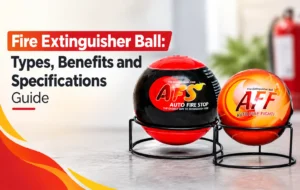
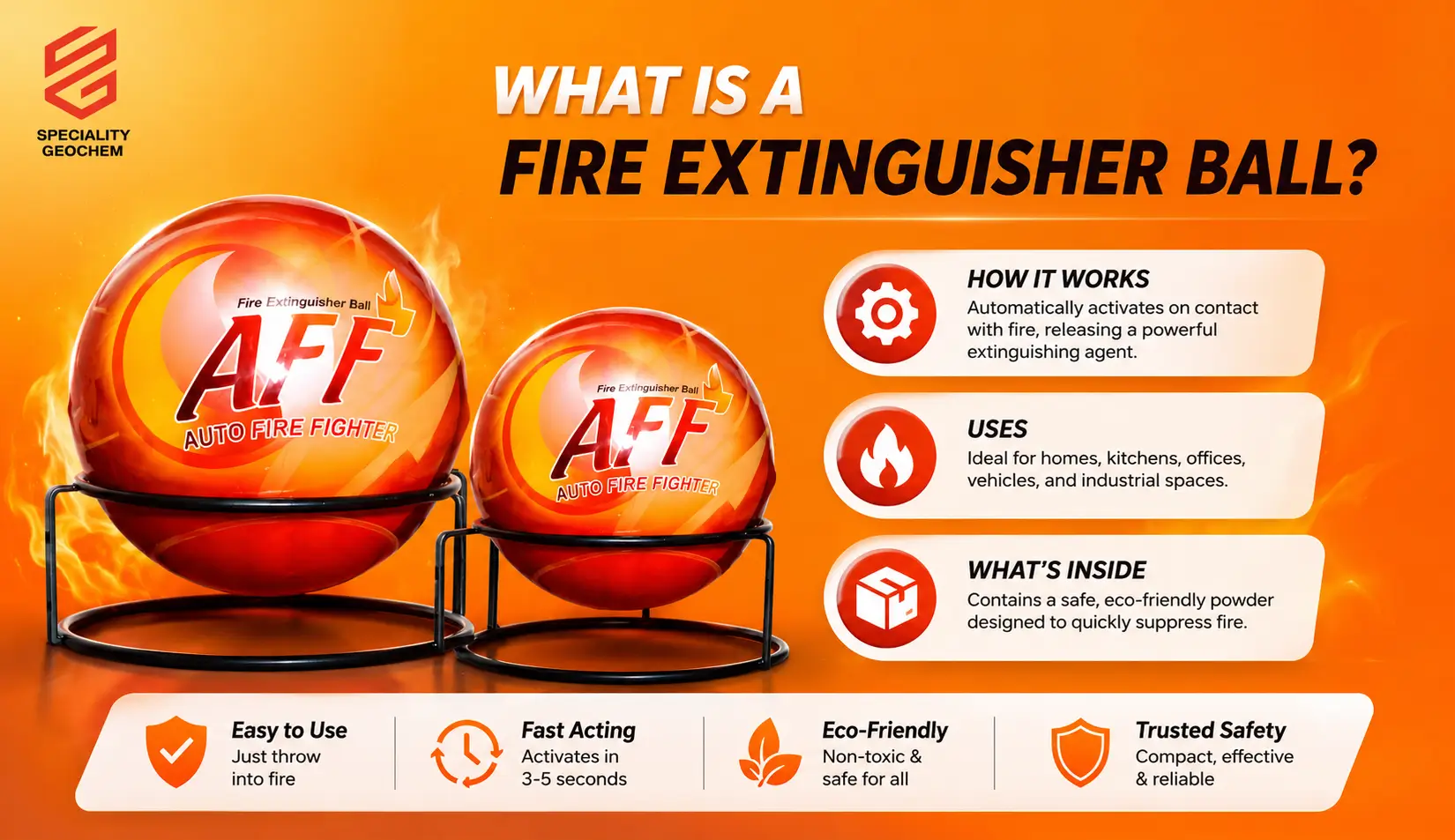
A fire extinguisher ball is a spherical device filled with dry fire-suppressing powder, usually ammonium phosphate based (ABC powder). Its shell is designed to burst when exposed to heat or impact. The released powder coats the burning material and interrupts the chemical reaction that keeps the fire going. It is lightweight, needs no training, and works best as an extra layer of protection alongside approved extinguishers.
How Does a Fire Extinguisher Ball Work?
Automatic Activation
An automatic fire ball is placed or hung above a hazard, such as an electrical panel or storage rack. When the surrounding temperature reaches the activation point (often around 120-200°C, depending on the model), the shell breaks and the powder disperses. This works even when nobody is present.
Manual Throwing
In an emergency, a person throws the ball toward the base of the fire from a safe distance. On impact, the shell breaks and the powder spreads over the flames.
Types of Fire Extinguisher Balls
By Activation Method
- Automatic: activates on heat, with no human action needed.
- Manual: thrown by hand.
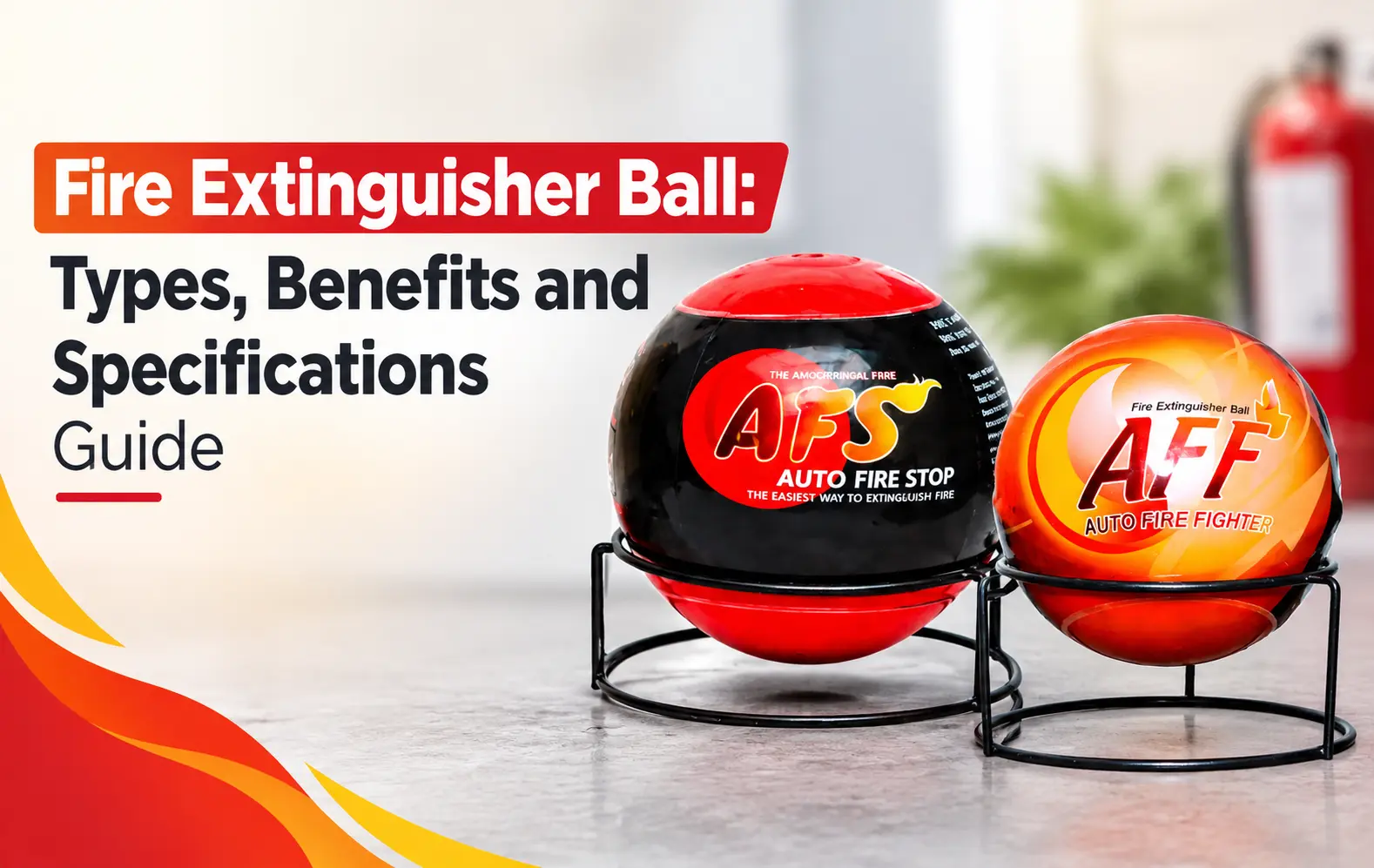
- Dual-mode: can be thrown or left to trigger automatically.
By Extinguishing Agent
- ABC dry powder: the most common type, suited to solid, liquid, gas and electrical fires.
- Other powder grades: some products target specific fire classes. Always check the class rating on the label.
Key Benefits of a Fire Extinguisher Ball
- Easy to use: no pins, hoses or special training.
- Works unattended: the automatic type protects empty rooms, closed shops and storage areas.
- Compact and light: easy to mount in tight or high places.
- Low maintenance: no gauges or pressure checks, only periodic inspection.
- Quick response: it acts as soon as heat or flame reaches it.
Typical Specifications to Check
| Feature | Typical range |
| Filling agent | ABC dry powder (ammonium phosphate) |
| Weight | About 1.3 kg (varies by model) |
| Activation temperature | About 120-200°C |
| Coverage area | Stated by the manufacturer per ball |
| Shelf life | Commonly 3-5 years |
These are typical examples. Replace them with the tested values from your own product data sheet.
Where Can You Use It?
- Homes and kitchens
- Offices and server rooms
- Electrical panels and meter rooms
- Warehouses and godowns
- Shops, vehicles and generator rooms
Limitations and Safety
A fire extinguisher ball does not replace certified fire extinguishers or a fire safety system required for your building. For large or fast-spreading fires, evacuate and call the fire department (101 in India). Check local fire safety rules and your Fire NOC requirements before relying on any product.
Conclusion
A fire extinguisher ball is a practical, low-effort way to add protection to homes and workplaces, especially where no one may be present when a fire starts. Compare the activation method, fire class rating, coverage and shelf life before you choose.
FAQs
Q1. What is a fire extinguisher ball?
A fire extinguisher ball is a spherical device filled with dry fire-suppressing powder, usually ABC powder. When the shell breaks from heat or impact, the powder spreads over the fire and interrupts the chemical reaction that keeps it burning.
Q2. How does a fire extinguisher ball work?
It works in two ways. The automatic type activates when the surrounding temperature reaches its set point. The manual type is thrown at the base of the fire, where the shell breaks on impact and releases the powder.
Q3. At what temperature does an automatic fire ball activate?
Most models activate somewhere between about 120°C and 200°C. The exact temperature depends on the model, so check your product’s data sheet.
Q4. Can a fire extinguisher ball be used on electrical fires?
ABC dry powder is non-conductive, so it is commonly used near electrical panels, meter rooms and wiring. Always confirm the fire class rating printed on your product label.
Q5. Do I need training to use a fire extinguisher ball?
No. There is no pin, hose or nozzle. For manual use, you throw it toward the base of a small fire from a safe distance. For automatic use, you only need to mount it correctly.
Q6. Where should I place an automatic fire ball?
Place it above or near likely fire sources, such as electrical panels, generator rooms, kitchens, storage racks and server rooms. Follow the installation guide so it hangs or sits at the right height and distance.
Q7. How large an area does one fire extinguisher ball cover?
Coverage differs by product and is stated by the manufacturer. Do not assume one ball protects a whole room, so follow the coverage figure on your data sheet and add more units for larger spaces.
Q8. How long does a fire extinguisher ball last?
Shelf life is commonly 3 to 5 years, depending on the product and storage conditions. Check the manufacturing date and replace it when it expires.