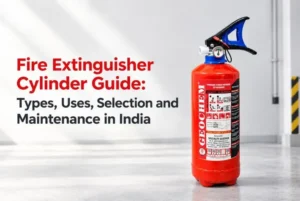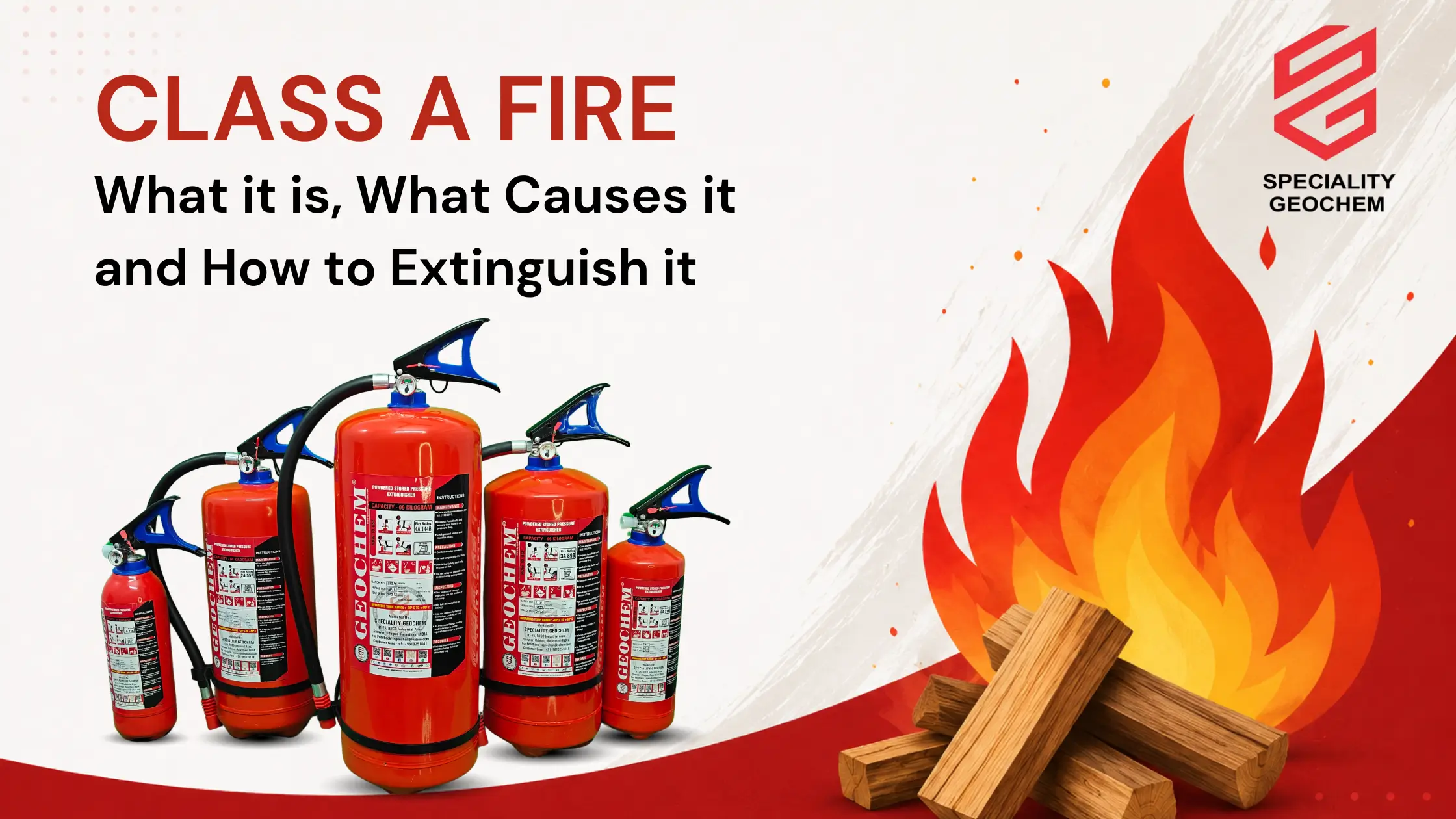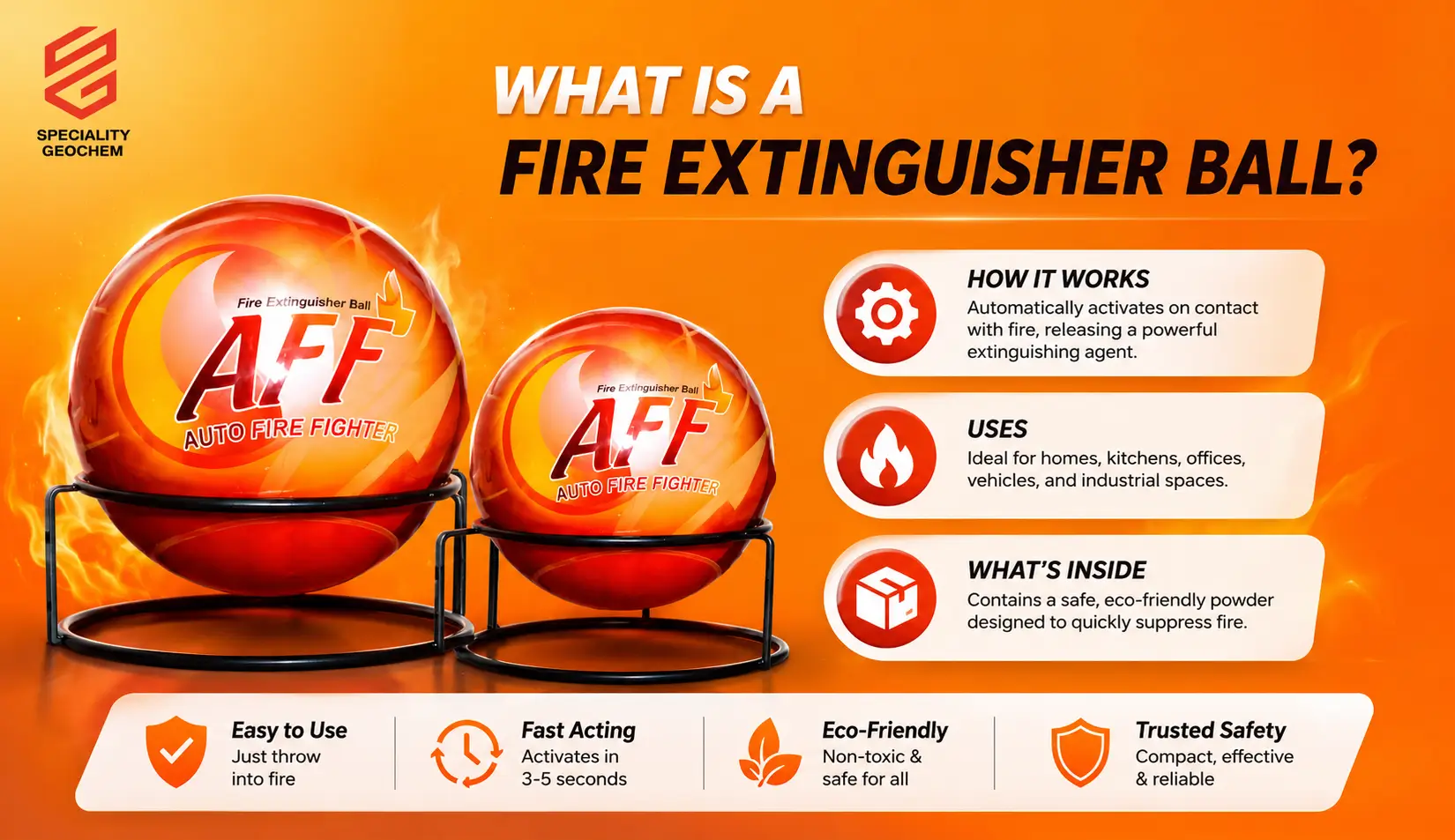
A fire extinguisher cylinder is often the first line of defence when a small fire starts. Used correctly in the first minute, it can stop a fire from becoming a disaster. But a cylinder only helps if it is the right type, in the right place, and in working condition. This guide explains how a fire extinguisher cylinder works, which type suits which fire, and how to keep it ready.
What Is a Fire Extinguisher Cylinder?
A fire extinguisher cylinder is a portable pressurised container that holds an extinguishing agent such as water, foam, dry powder or carbon dioxide. When you operate the handle, the pressure pushes the agent out through a hose or nozzle onto the fire. In India, portable extinguishers are covered by IS 15683, and their selection, installation and maintenance are guided by IS 2190.
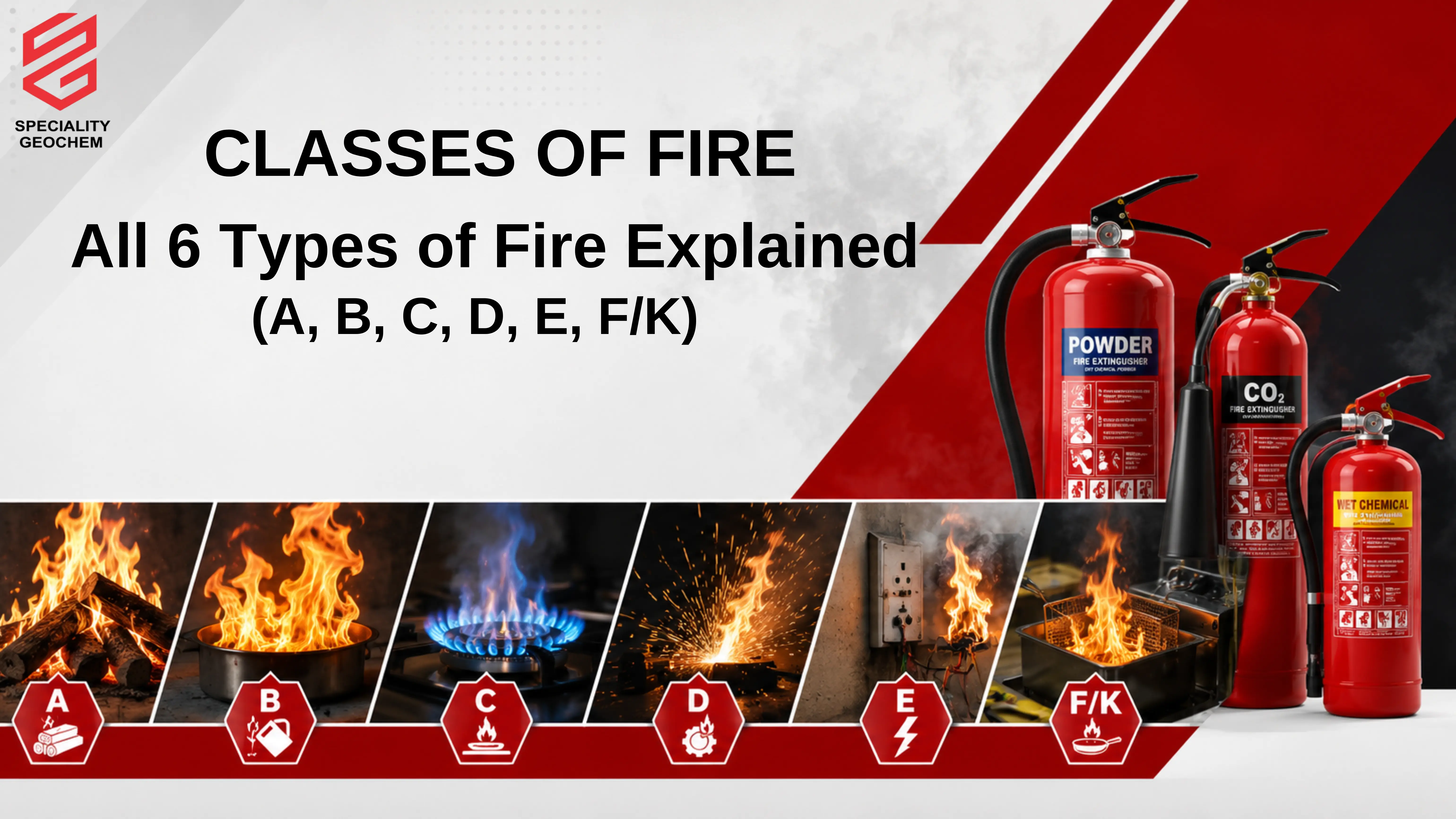
Know Your Fire Classes First
Choosing a cylinder starts with understanding what might burn:
- Class A: wood, paper, cloth, plastic
- Class B: petrol, diesel, oil, paint, solvents
- Class C: flammable gases such as LPG
- Class D: combustible metals
- Class K (kitchen): cooking oils and fats
Types of Fire Extinguisher Cylinders and Their Uses
Water Type
Best for Class A fires in offices, schools and homes. Never use it on electrical or oil fires.
Foam Type (AFFF/Mechanical Foam)
Suitable for Class A and Class B fires. A good choice for garages, workshops, fuel storage areas and parking lots.
ABC Dry Powder Type
The most widely used cylinder. It handles Class A, B and C fires and is common in homes, shops, factories and vehicles. The powder can irritate the lungs and leave a mess, so ventilate the area after use.
Carbon Dioxide (CO2) Type
Ideal for electrical equipment, server rooms and control panels, because it leaves no residue. Hold it by the insulated handle, since the horn gets very cold.
Wet Chemical Type
Designed for Class K kitchen fires, especially in restaurants and commercial kitchens.
Clean Agent Type
Used where equipment is sensitive and expensive, such as data centres and laboratories.
How to Choose the Right Fire Extinguisher Cylinder
1. Match the Cylinder to the Hazard
Consider the main fire risk in the space. A home kitchen, a petrol pump and a server room all need different cylinders.
2. Check Certification and Rating
Look for the ISI mark, the fire class rating, the capacity, and the manufacturing date on the label. Buy from authorised sellers and avoid unmarked or unusually cheap cylinders.
3. Pick the Right Size
Common capacities include 1 kg, 2 kg, 4 kg, 6 kg and 9 kg. Smaller sizes suit homes and cars, while larger ones suit factories and warehouses. Heavy cylinders are harder to handle, so choose a size people can actually lift.
Where to Place a Fire Extinguisher Cylinder
- Keep it near exits and along escape routes.
- Mount it at an easy-to-reach height, and keep the path clear.
- Place it close to risk areas but not directly beside them, so you can reach it if a fire blocks access.
- Make sure everyone in the building knows where it is.
How to Use a Fire Extinguisher Cylinder: The PASS Method
- Pull the safety pin.
- Aim at the base of the fire, not the flames.
- Squeeze the handle.
- Sweep side to side until the fire is out.
Stay at a safe distance and keep an exit behind you. If the fire is spreading fast or filling the room with smoke, leave immediately and call the fire department on 101.
Maintenance and Inspection
Regular Checks
- Inspect cylinders monthly for dents, rust, a blocked nozzle or a missing pin.
- Confirm the pressure gauge, where fitted, is in the green zone.
- Keep the label readable.
Servicing and Refilling
Have cylinders serviced by a qualified professional, refilled after any use (even partial), and pressure-tested as per IS 2190 and the manufacturer’s guidance. Record each service date on the tag.
Common Mistakes to Avoid
- Using a water cylinder on an electrical or oil fire
- Placing cylinders behind doors or storage
- Ignoring expiry and service dates
- Assuming one cylinder protects a whole building
FAQs
A fire extinguisher cylinder is a portable, pressurised container filled with an extinguishing agent such as water, foam, ABC dry powder, CO2 or wet chemical. When you operate the handle, the agent is released through a hose or nozzle onto the fire.
An ABC dry powder cylinder (1 kg to 2 kg) is a common choice because it handles Class A, B and C fires. For a kitchen, you may also consider a wet chemical or suitable kitchen-rated extinguisher for cooking oil fires.
The main types are water, foam, ABC dry powder, carbon dioxide (CO2), wet chemical and clean agent. Each one is designed for specific fire classes, so the right choice depends on what might burn.
Class A covers solids like wood, paper and cloth. Class B covers flammable liquids like petrol and oil. Class C covers gases like LPG. Class D covers combustible metals, and Class K covers cooking oils and fats.
A CO2 or clean agent cylinder is generally preferred for electrical equipment, since they leave no residue. Never use a water cylinder on an electrical fire, because water can conduct electricity.
PASS stands for Pull the pin, Aim at the base of the fire, Squeeze the handle, and Sweep side to side. Always keep an exit behind you while using it.
This depends on the type and manufacturer. Check the manufacturing date and service tag, and follow the manufacturer’s guidance and IS 2190 for servicing and replacement. A cylinder that is damaged, rusted or fails a pressure test should be replaced.
Do a quick visual check every month. Look for dents, rust, a missing pin, a blocked nozzle and a pressure gauge in the green zone. Get a professional service done at the intervals recommended by the manufacturer and applicable standards.
Yes. Even a short discharge can reduce pressure and leave too little agent. Have it refilled and checked by a qualified service provider before putting it back in place.
Common sizes are 1 kg, 2 kg, 4 kg, 6 kg and 9 kg. Smaller sizes suit homes and cars, while larger ones suit factories and warehouses. Pick a size that the people in your space can actually lift and handle.