A small pan fire can spread fast. In that moment, a fire blanket is often the fastest, cleanest tool you can reach for. But it only works if you know how to use a fire blanket correctly, which fires it suits, and where it should hang.
This guide on how to use a fire blanket is written by the fire safety team at Speciality Geochem, an Udaipur-based manufacturer of fire blankets, fire extinguishers and fire balls supplying homes, restaurants and industries across India.
What Is a Fire Blanket and What Is It Made Of
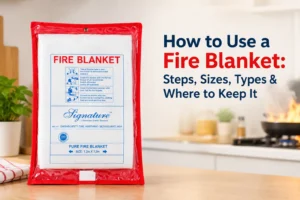
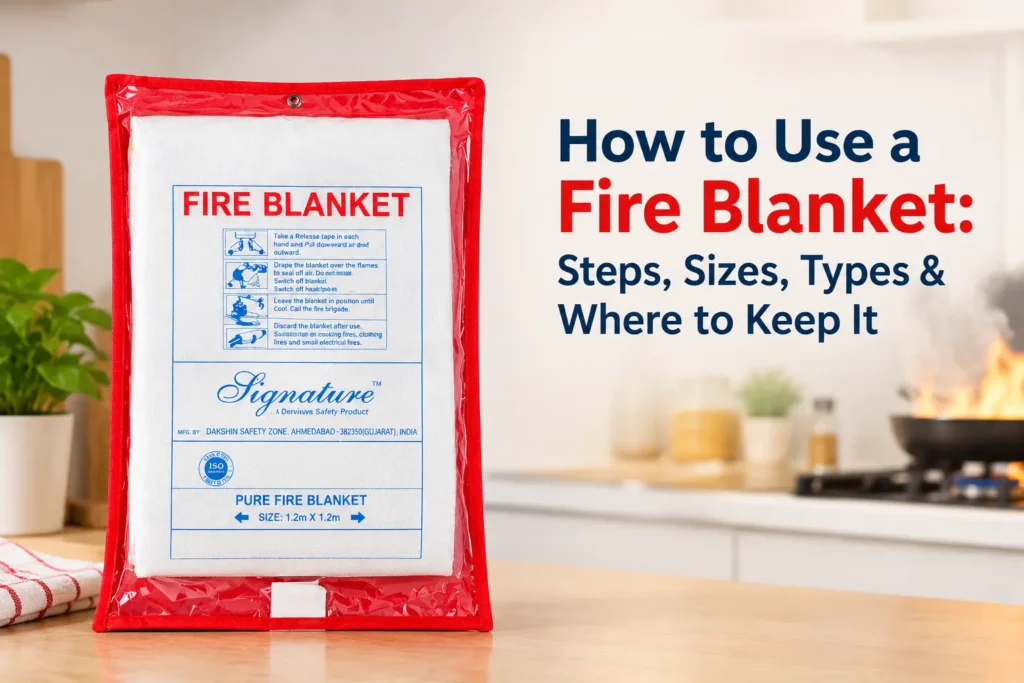
A fire blanket is a sheet of fire-resistant fabric, usually woven fibreglass, treated to withstand high heat. It is folded inside a quick-release pouch or wall-mounted case with two pull tapes, so the first move in how to use a fire blanket is simply pulling them.
It works on a simple principle: fire needs oxygen. When you cover a small fire, the blanket cuts off the air supply and the flames die out.
Common types include:
- Kitchen and home blankets: compact, light, and wall-mounted near the cooking area.
- Industrial blankets: larger and heavier, for workshops, labs and warehouses.
- Welding blankets: used to shield nearby surfaces from sparks rather than to put out fires.
Which Fires a Fire Blanket Is Safe For
Before deciding how to use a fire blanket, check the fire type. It is designed for small fires in their early stage:
- Cooking oil and pan fires: the most common use of a fire blanket for kitchen safety.
- Class A fires: small fires involving paper, cloth or wood.
- Clothing fires: wrapping a person whose clothes have caught fire.
The key rule: the fire must be small enough to cover completely.
How to Use a Fire Blanket: 5 Steps
Practise these five steps before an emergency:
- Turn off the heat source. Switch off the gas or stove only if you can do it safely.
- Pull both tapes sharply downward. The blanket drops out of the pouch, ready to open.
- Shield your hands. Wrap the top edges around your hands so the blanket protects them from the heat.
- Place the blanket over the fire, away from you. Lay it gently over the pan, starting from the edge closest to you, so the flames are pushed away. Do not throw it.
- Leave it in place for at least 30 minutes. Do not lift the blanket to check. Oil can reignite if air reaches it before it cools.
For a clothing fire, the rule for how to use a fire blanket changes: wrap the person, lay them on the floor and roll them to smother the flames. Then call for medical help.
When NOT to Use a Fire Blanket
Knowing how to use a fire blanket also means knowing its limits. Do not use one when:
- The fire is larger than the blanket or spreading across surfaces.
- Flames have reached cabinets, curtains or the ceiling.
- The fire involves an LPG cylinder leak. Shut the valve only if it is safe, then leave.
- The fire is in live electrical wiring or a panel. Cut the power first.
- Smoke is building and your exit is at risk.
In all of these cases, get everyone out and call 101 or 112.
Right Size & Placement for Kitchens and Workshops
Choosing the right fire blanket size depends on the risk you are covering. Common sizes include:
| Fire blanket size | Best for |
| 1 m x 1 m | Home kitchens, small pans, apartments |
| 1.2 m x 1.2 m | Larger home kitchens, offices, cafes |
| 1.2 m x 1.8 m | Restaurant kitchens, labs, clothing fires |
| 1.8 m x 1.8 m | Workshops, factories, warehouses |
For most households, a 1 m x 1 m fire blanket for home use is enough to cover a standard kadhai or frying pan.
Placement matters as much as knowing how to use a fire blanket:
- Mount the fire blanket for kitchen use near the kitchen exit, not directly above or behind the stove.
- Keep it at shoulder height so anyone can pull the tapes.
- In workshops, place one near each high-risk station, such as welding or grinding areas.
Fire Blanket vs Fire Extinguisher: Which to Pick
The fire blanket vs fire extinguisher question has a simple answer: most homes and businesses need both.
| Feature | Fire blanket | Fire extinguisher |
| Best for | Pan fires, clothing fires | Wider range of small fires |
| Ease of use | Very easy, no training | Needs the PASS method |
| Mess | None | Powder or foam residue |
| Reach | Must be close to the fire | Sprays from a safe distance |
| Maintenance | Visual check | Pressure checks and refills |
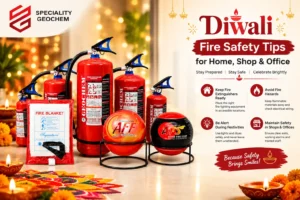
Once you know how to use a fire blanket, it is the better first choice for a kitchen oil fire. A fire extinguisher is better when the fire is a little larger or out of arm’s reach. The Speciality Geochem Fire Safety Combo 3-in-1 pairs both with an automatic fire ball, so you are covered for each situation.
Care, Storage & Replacement
A fire blanket for home or work is low-maintenance, but not maintenance-free:
- Check monthly: the pouch should be intact and the pull tapes visible.
- Keep it dry: store it away from steam, water and direct sunlight.
- Replace after use: a blanket used on an oil fire may be contaminated and should not be reused.
- Replace if damaged: frayed fabric, torn pouches or missing tapes mean it is time for a new one.
Train everyone at home or work on how to use a fire blanket, and show them where it hangs.
Conclusion
Learning how to use a fire blanket takes two minutes, and it can save your kitchen, your home or your workplace. Pick the right fire blanket size, mount it in the right place, and make sure everyone knows the five steps. Speciality Geochem manufactures fire blankets for homes, restaurants, hospitals and industries across India, with OEM and bulk supply available. Explore our fire blanket range or contact our team for sizes and pricing.
Frequently Asked Questions
Q1. How to use a fire blanket on a kitchen fire?
Turn off the heat if safe, pull both tapes, shield your hands, lay the blanket over the pan away from you, and leave it for at least 30 minutes.
Q2. What is the best fire blanket size for home use?
A 1 m x 1 m fire blanket for home kitchens covers most pans and kadhais. Larger kitchens may need 1.2 m x 1.2 m.
Q3. Can a fire blanket be reused?
If it was used on an oil or grease fire, replace it. Contamination can reduce its performance.
Q4. Fire blanket vs fire extinguisher: which is better for a kitchen?
For pan and oil fires, a fire blanket for kitchen use is faster and leaves no mess. Keep an ABC extinguisher nearby for larger fires.
Q5. Can a fire blanket be used on an electrical fire?
Only on a small appliance fire after the power is switched off. Never use it on live wiring or panels.
Q6. Where should I keep a fire blanket in the kitchen?
Near the kitchen exit at shoulder height, where you can reach it without crossing the stove.
Q7. Is it safe to throw water on an oil fire?
No. Water causes burning oil to splash and spread. Use a fire blanket or a suitable extinguisher instead.