An ABC fire extinguisher is the most widely installed fire extinguisher in Indian homes, offices, shops, factories and vehicles, and for good reason. One cylinder covers the three most common fire types: burning solids, flammable liquids and flammable gases. It is also safe to use on live electrical equipment.
But “multi-purpose” does not mean “use anywhere.” ABC powder leaves a fine, corrosive residue, it is the wrong choice for a burning kadhai of oil, and picking the wrong capacity can leave you short in the first critical minute of a fire.
This guide explains how an ABC dry powder fire extinguisher works, where to use it, where not to, which capacity fits your space, and how it compares with a CO2 extinguisher. It is written by the team at Speciality Geochem, an Udaipur-based manufacturer of ISI-marked fire extinguishers since 1996.
What Is an ABC Dry Powder Extinguisher
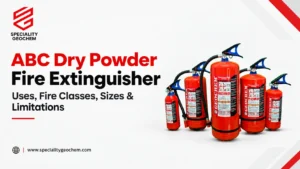
An ABC dry powder extinguisher is a portable cylinder filled with a fine chemical powder and pressurised with an inert gas, usually nitrogen. When you squeeze the handle, the gas pushes the powder out through the hose as a dense cloud that smothers the fire.
The active ingredient is mono ammonium phosphate (MAP). In India, ABC powder is often called “MAP powder” or “ternary powder,” and it is covered by IS 14609. Portable extinguishers themselves are made to IS 15683, and a genuine unit carries the ISI mark on the cylinder.
The “ABC” on the label tells you which fire classes it is rated for:
| Fire class (IS 15683) | What is burning | Examples |
| Class A | Ordinary solid combustibles | Wood, paper, cloth, cardboard, plastics |
| Class B | Flammable liquids | Petrol, diesel, paints, thinners, solvents |
| Class C | Flammable gases | LPG, CNG, PNG, acetylene |
India follows the European-style classification, where Class C means gas fires. In the US system, Class C means electrical fires. Either way, an ABC extinguisher can be used on electrical equipment because the powder does not conduct electricity.
There are two common designs:
- Stored pressure: powder and nitrogen share one cylinder, with a pressure gauge on the valve. This is the most common type for 1–9 kg units.
- Cartridge type: a separate gas cartridge pressurises the cylinder only when operated. This is common in larger and trolley-mounted units used in industry.
See our range of ABC powder fire extinguishers.
How ABC Powder Works on Class A, B and C Fires
Every fire needs heat, fuel, oxygen and an uninterrupted chemical chain reaction. ABC powder attacks the fire in three ways at once.
On Class A fires (solids): MAP powder melts at roughly 150–180°C. On hot wood, paper or fabric, it forms a sticky, glass-like coating that seals the surface from oxygen. This stops smouldering embers from flaring up again, which ordinary BC powders cannot do.
On Class B fires (liquids): The powder cloud blankets the burning surface and interrupts the chemical chain reaction in the flames. Aim at the base of the fire and sweep side to side so the liquid does not splash and spread.
On Class C fires (gases): The powder knocks down gas flames quickly by breaking the chain reaction. The first step, though, is always to shut off the gas supply at the cylinder or valve. Putting out a gas flame while gas keeps leaking can create an explosive build-up.
On electrical fires: Dry powder is non-conductive, so an ABC extinguisher can be used on live electrical equipment. Switch off the mains first if it is safe to do so, and stay at least 1 metre away.
How to operate: remember PASS
- Pull the safety pin.
- Aim the nozzle at the base of the fire, not at the flames.
- Squeeze the handle steadily.
- Sweep side to side until the fire is out.
A small 1–2 kg unit discharges completely in about 8–12 seconds, so there is no time to waste. Always keep your back to a clear exit.
Where to Use It (Offices, Shops, Factories, Vehicles)
The main ABC extinguisher uses are in places where several types of fire risk exist together and nobody can predict which one will start. That covers most everyday premises.
Offices: Paper files, furniture, carpets, wiring and power strips mean Class A and electrical risks sit side by side. Place units near exits, pantry entrances (not as the main kitchen protection) and electrical distribution boards.
Shops and showrooms: Stock such as cloth, packaging, plastics and cartons is classic Class A fuel. Many shops also store aerosols, paints or a small LPG cylinder for tea. One ABC unit near the counter and one near the storeroom covers most small shops.
Factories and warehouses: Workshops handle solvents, lubricants, fuels, packaging and gas-fired equipment. ABC units work well across production floors, loading bays, DG set rooms and stores. Large open areas often add trolley-mounted ABC units for higher discharge.
Vehicles: Cars, buses, trucks, tractors and two-wheeler showrooms all face fuel, wiring and upholstery fires. A compact 1–2 kg ABC unit mounted within the driver’s reach is the standard choice for cars. Commercial vehicles and buses usually carry larger units.
Other common places: Homes (living areas, garages, near the main switchboard), schools, hospitals’ general areas, hotels, petrol pumps, godowns, construction sites and farmhouses.
So, where to use an ABC fire extinguisher? Anywhere you need one reliable, all-round extinguisher for mixed fire risks.
Where Not to Use It (Server Rooms, Kitchen Oil Fires, Delicate Equipment)
ABC powder puts fires out well, but it is messy and mildly corrosive. In some places, the clean-up damage can be worse than a small fire.
Server rooms and data centres: The fine powder spreads into fans, circuit boards and connectors. When it absorbs moisture, it turns acidic and can corrode electronics over the following days. Use a CO2 extinguisher or a clean-agent system here, or an automatic fire suppression tube system inside server cabinets and panels.
Kitchen oil and fat fires: Burning cooking oil is a Class F fire. Powder may knock the flames down, but it does not cool the oil below its ignition point, so the fire can flare up again within seconds. The force of the discharge can also splash burning oil. Turn off the heat and smother the pan with a fire blanket or use a wet chemical (Class F) extinguisher.
Delicate and high-value equipment: Labs, CNC machines, medical equipment, telecom panels, museums, archives and libraries. Powder residue is hard to remove from fine mechanisms and documents. CO2 or clean-agent extinguishers are better choices.
Confined, unventilated spaces: Discharging a large powder unit in a small closed room cuts visibility to near zero within seconds. This makes it hard to find the exit. Use the smallest suitable unit and always keep an escape route behind you.
Metal fires (Class D): Burning magnesium, sodium, lithium or titanium need special Class D powders. ABC powder is not rated for them.
Common Capacities and How to Choose
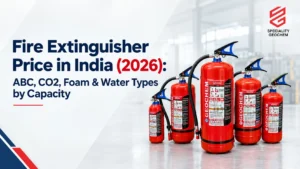
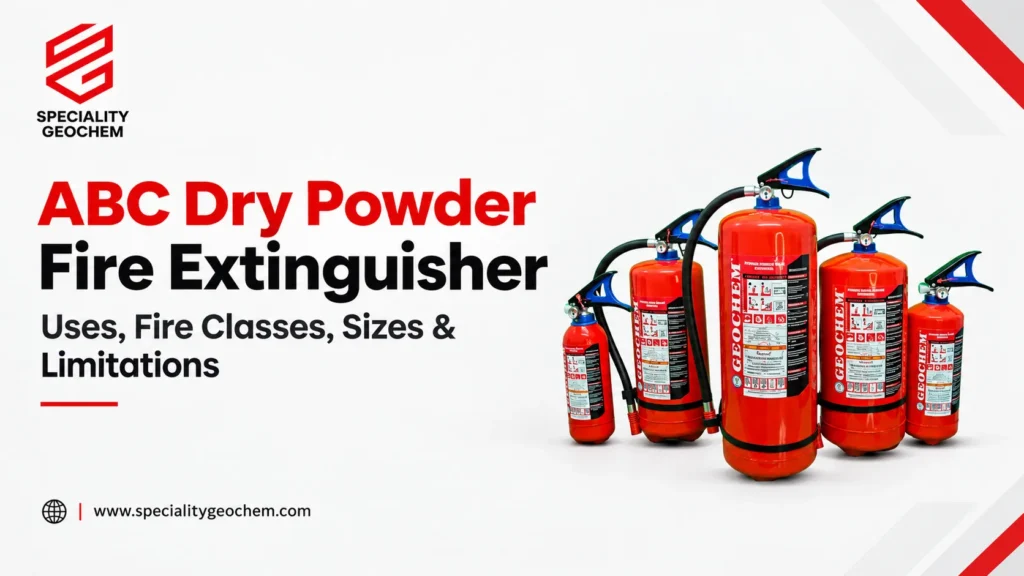
ABC fire extinguisher capacity is measured by the weight of powder inside. Portable units in India typically come in 1, 2, 4, 5, 6 and 9 kg, with trolley-mounted units of 25, 50, 75 kg and above for industrial use.
| Capacity | Typical use | Notes |
| 1 kg | Cars, two-wheeler showrooms, small cabins | Compact and light; short discharge time |
| 2 kg | Cars, SUVs, homes, small offices | Good balance of size and firefighting power for homes |
| 4 kg | Shops, offices, clinics, restaurants’ dining areas | The most common choice for small commercial spaces |
| 5–6 kg | Offices, schools, hotels, workshops, buses, trucks | Standard size for most commercial and institutional buildings |
| 9 kg | Factories, warehouses, godowns, petrol pumps, DG rooms | Longer reach and discharge for higher fire loads |
| 25–75 kg (trolley) | Large factories, tank farms, chemical and fuel storage | Wheeled units for large spills and open areas |
How to choose the right capacity
- Match the fire load. More stored fuel, solvents or packaging means a bigger unit, or more units.
- Think about who will use it. A 9 kg cylinder weighs about 14 kg in total. In homes and offices where any staff member may need to lift it, 2–6 kg units are easier to handle.
- Cover the floor area. It is better to have several mid-size units spread across a floor than one large unit in a corner. Nobody should have to walk more than about 15 metres to reach an extinguisher.
- Check the fire rating on the label. Two 6 kg units can have different ratings (for example 21A 144B vs 27A 183B). A higher number means it can put out a larger test fire.
- Follow local rules. Fire NOCs, factory inspectors and insurers often specify the number and size of extinguishers. When in doubt, ask your local fire department or a supplier for a site assessment.
Installation and Maintenance Basics
An extinguisher that is hidden, blocked or unpressurised is useless in an emergency. In India, selection, installation and maintenance are guided by IS 2190.
Installation
- Mount it on a wall bracket near exits, escape routes and the hazard it protects, not deep inside the risk area.
- Keep the carrying handle about 1 to 1.5 metres above the floor so most people can lift it off easily.
- Make sure it is clearly visible, with a signage sticker above it, and never blocked by stock, furniture or doors.
- Keep it away from direct heat, rain and long exposure to sunlight.
- In vehicles, use a firm bracket within the driver’s reach. Never leave it loose under a seat.
Maintenance checklist
- Monthly visual check: pressure gauge needle in the green zone, safety pin and tamper seal intact, no dents, rust or cracks, hose not blocked or cracked.
- Shake or invert occasionally: helps keep powder from caking, especially in humid areas and vehicles.
- Annual maintenance by a trained technician: full inspection of the valve, hose, gauge, cartridge (if any) and powder condition. Note the date on the service tag.
- Powder replacement and pressure test: Indian practice under IS 2190 has traditionally been every 3 years for dry powder units. Follow the interval on your extinguisher’s label and your service provider’s schedule.
- Refill immediately after any use, even a short burst. A partly used unit loses pressure.
- Keep a register: location, type, capacity, manufacturing date, service dates and refill dates. Fire officers and insurers often ask for it.
Speciality Geochem supplies ISI-marked units and can help with refilling and servicing. Contact our team for details.
ABC Powder vs CO2 Extinguisher
ABC powder is the better all-rounder. CO2 is the better choice where clean-up and sensitive equipment matter. Many premises keep both.
| Feature | ABC dry powder | CO2 |
| Fire classes | A, B, C and electrical | B and electrical (limited on A) |
| Works on wood, paper, cloth | Yes, very effective | Not recommended: cools briefly, embers may reignite |
| Residue after use | Fine powder, needs cleaning; mildly corrosive | None: CO2 gas evaporates |
| Safe for computers and servers | Not ideal: residue can damage electronics | Yes, preferred choice |
| Effectiveness outdoors / in wind | Good | Poor: gas disperses quickly |
| Use in small closed rooms | Reduces visibility | Displaces oxygen: leave the room after use |
| Weight for the same size | Lighter cylinder | Heavier high-pressure cylinder |
| Cost | Lower | Higher |
| Best for | Homes, offices, shops, factories, vehicles | Server rooms, electrical panels, labs, control rooms |
Simple rule: use ABC powder as your general-purpose extinguisher across the building. Add a CO2 fire extinguisher next to server racks, electrical panels and expensive equipment. Add a fire blanket or wet chemical unit in the kitchen.
Conclusion
An ABC fire extinguisher is the most practical single choice for homes, offices, shops, factories and vehicles because it handles solid, liquid, gas and electrical fires. Its limits are just as important: keep it away from server rooms, delicate equipment and cooking oil fires, where CO2, clean agents or a fire blanket work better.
Pick a capacity that matches your fire load and the people who will use it, mount it where everyone can see and reach it, and keep it serviced on schedule.
Looking for ISI-marked ABC dry powder fire extinguishers in 1 kg to 9 kg and trolley sizes? Speciality Geochem has manufactured fire safety equipment in Udaipur since 1996 and supplies across India. Get a free quote or call +91-9799661841.
Frequently Asked Questions
Q1. What does ABC mean on a fire extinguisher?
ABC means the extinguisher is rated for three fire classes. Under the Indian standard IS 15683, Class A is solid materials like wood, paper and cloth, Class B is flammable liquids like petrol and paint, and Class C is flammable gases like LPG. In the US system, Class C refers to electrical fires instead.
Q2. Can an ABC extinguisher be used on electrical fires?
Yes. ABC dry powder does not conduct electricity, so it is safe on live electrical equipment such as wiring, switchboards and appliances. Switch off the power first if it is safe to do so and keep at least 1 metre away. For computers and servers, a CO2 extinguisher is better because ABC powder leaves a corrosive residue.
Q3. Is ABC powder harmful to breathe?
ABC powder (mono ammonium phosphate) is low in toxicity, but breathing it in can irritate the nose, throat and lungs and cause coughing. It can also irritate the eyes and skin. After use, ventilate the area, leave the room until the dust settles, and rinse eyes or skin with water. People with asthma should avoid the dust and seek medical help if breathing problems continue.
Q4. Can I use an ABC extinguisher on a cooking oil fire?
It is not recommended. ABC powder may knock down the flames but does not cool the hot oil, so the fire can reignite. The force of the powder can also splash burning oil. Turn off the heat and cover the pan with a fire blanket or a lid, or use a wet chemical (Class F) extinguisher. Never use water.
Q5. How long does ABC powder last before it needs refilling?
If unused, ABC powder is usually replaced during scheduled servicing, traditionally about every 3 years under Indian practice (IS 2190). Always follow the interval on your extinguisher’s label. Refill it immediately after any use, even a short burst, or if the pressure gauge needle falls out of the green zone.
Q6. What is the difference between DCP and ABC fire extinguishers?
DCP (dry chemical powder) usually refers to BC extinguishers filled with sodium bicarbonate powder, which work on liquid, gas and electrical fires. ABC extinguishers use mono ammonium phosphate, which also works on solid Class A fires like wood, paper and cloth. That makes ABC the more versatile choice for most homes and workplaces.
Q7. Which ABC fire extinguisher capacity is best for a home or car?
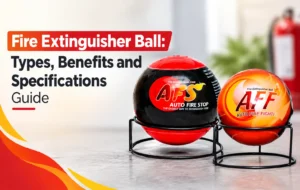
For cars, a 1 kg or 2 kg ABC extinguisher fits easily and is enough for small engine or interior fires. For homes, a 2 kg unit near the living area or main switchboard is a good start, with a 4 kg unit for larger houses. Pair it with a fire blanket or fire extinguisher ball in the kitchen.