
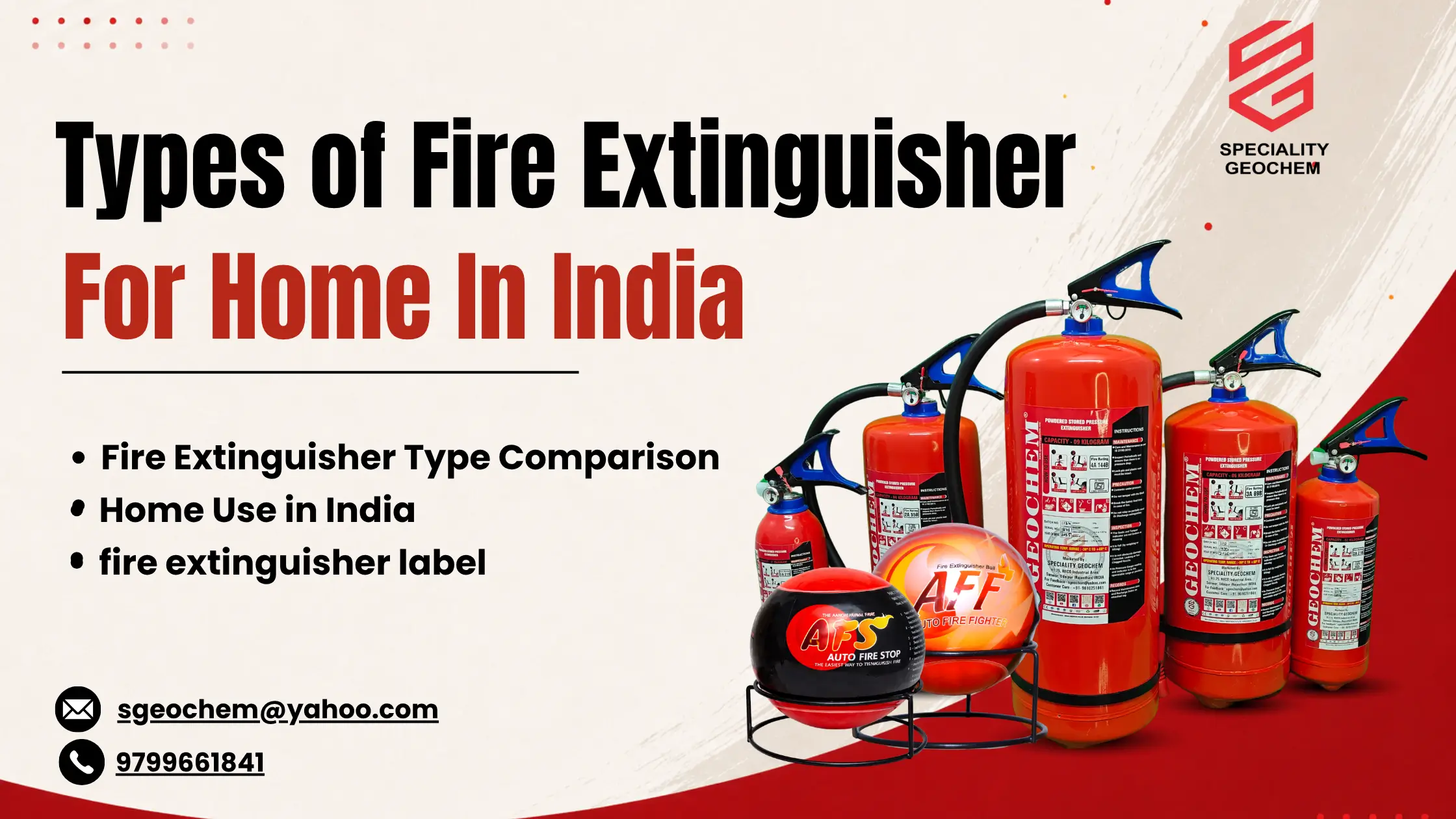
Quick Answer: For most Indian homes, the best type of fire extinguisher for home use is a 2kg ABC Dry Powder extinguisher. It covers Class A, B, and C fires. Pair it with a Water Mist unit or an automatic fire ball in the kitchen, where cooking oil (Class F) fires are common and dry powder causes significant mess.
Using the wrong type of fire extinguisher on a fire can make it worse. A dry powder extinguisher used on a cooking oil fire, for example, can scatter burning oil and spread flames instead of stopping them. That is not a minor inconvenience. It is a life safety failure.
Most Indian homes either have no fire extinguisher at all or keep a single ABC powder unit and assume it covers every situation. It does not. Fire class matters more than size, and room placement matters as much as fire class.
This article covers the main types of fire extinguisher for home use in India, what each type does and does not work on, and which one to buy based on where you live and how your home is laid out.
What Type of Fire Extinguisher for Home Is Actually Right?
The right type of fire extinguisher for home depends on the fires you are most likely to face. Indian homes typically face four fire classes: Class A (wood, paper, fabric), Class B (flammable liquids like paint or petrol), Class C (electrical fires), and Class F (cooking oil and fat fires). Most residential fires involve more than one class.
For the majority of Indian homes, a 2kg ABC Dry Powder extinguisher covers Class A, B, and C fires and works as a reliable starting point. Homes with kitchens, which means almost every home, should also consider a Water Mist extinguisher or an automatic fire extinguisher ball for cooking oil fire risk.
The 5 Main Types of Fire Extinguisher for Home Use
Each fire extinguisher type uses a different agent to suppress fire. Choosing the wrong one reduces effectiveness or creates new hazards. Here are the five fire extinguisher types for home use you need to know.
1. ABC Dry Powder Fire Extinguisher
The ABC dry powder fire extinguisher is the most common multi purpose fire extinguisher for home use in India. It works on Class A (wood, paper, fabric), Class B (flammable liquids), and Class C (electrical) fires. A 1kg unit provides 8 to 12 seconds of discharge; a 2kg unit covers 1 to 2 standard rooms. The main drawback: it leaves a fine white powder that is difficult to clean up and can damage electronics or contaminate food. Not recommended as the primary extinguisher for kitchens or server rooms.
2. CO2 Fire Extinguisher
The CO2 fire extinguisher uses pressurized carbon dioxide gas to displace oxygen and suppress Class B and Class C fires. It leaves no residue, which makes it safe for use around electronics, electrical panels, and computer equipment. It does not work on Class A fires (paper, wood, fabric) and has no effect on Class F (cooking oil) fires. Do not use it as your only home extinguisher.
3. Water Mist Fire Extinguisher
Water Mist is the most versatile residential fire extinguisher type. It works on Class A, B, C, and F fires, including cooking oil fires, which makes it genuinely suitable for kitchens. It uses de-ionised water in a fine mist, no chemicals, no residue, and safe to use around people. The main trade off is cost: Water Mist fire extinguisher units cost more than ABC Powder units of the same size.
4. Foam Fire Extinguisher
A Foam based extinguishers work on Class A (wood, paper, fabric) and Class B (flammable liquids) fires. They are not suitable for electrical fires because foam conducts electricity. They are a reasonable choice for living rooms and garages but should not be your only extinguisher if the home has electrical equipment or a kitchen with an LPG cylinder.
5. Automatic Fire Extinguisher Ball
The automatic fire extinguisher ball activates on direct contact with flames, no person needs to be present, and no training is required. It works on Class A, B, C, and class F fires. It is particularly suitable for kitchens, garages, and electrical meter rooms where fire risk is high but occupants may not be awake or nearby. Lightweight, maintenance free, and cost effective as a passive backup. See our full automatic fire extinguisher ball guide for placement instructions.
Fire Extinguisher Type Comparison
| Type | Class A | Class B | Class C | Class F | Best For |
|---|---|---|---|---|---|
| ABC Dry Powder | Yes | Yes | Yes | No | General home use |
| CO₂ | No | Yes | Yes | No | Electrical areas |
| Water Mist | Yes | Yes | Yes | Yes | Kitchen, all-round use |
| Foam | Yes | Yes | No | No | Living room, garage |
| Auto Fire Ball | Yes | Yes | Yes | Yes | Unattended or high-risk areas |
Best Type of Fire Extinguisher for Home, Room by Room
The best type of fire extinguisher for home is not the same in every room. Fire risk and fire classes differ by room, and the right unit for a kitchen is not the right unit for a garage.
Kitchen: Use a Water Mist extinguisher or an automatic fire extinguisher ball. Cooking oil fires are Class F. ABC Dry Powder does not cover Class F fire and creates serious cleanup and contamination problems in a food preparation area.
Living Room: ABC Dry Powder or Foam works well here. Fires in living rooms are typically Class A fire (furniture, curtains, books) or Class B (candles, accelerants). Both types handle these effectively.
Bedroom: A compact 1kg ABC Dry Powder unit mounted near the door is sufficient. Bedroom fires are most often Class A. Size matters here. A lighter unit is easier to grab and use in an emergency.
Garage or Workshop: CO2 or ABC Dry Powder. Garages store flammable liquids (petrol, paint, solvents), Class B fire risk. CO2 leaves no residue; ABC Powder is cheaper. Either covers the main risks.
Electrical Panel or Meter Room: CO2 extinguisher or an automatic fire ball. Both handle electrical fires without leaving conductive residue. The fire ball has the added advantage of activating without human intervention, critical in a room that is often unoccupied.
Vehicle: A compact 1kg ABC Dry Powder or a mini automatic fire ball. Both are small enough to store under a seat and cover the main vehicle fire risks.
In India, most fire safety deaths happen at night or when occupants cannot reach an extinguisher in time. An automatic fire extinguisher ball placed near ignition risk areas like the kitchen or electrical panel can activate without anyone present.
Recommended Fire Extinguisher for Home Use in India, What Experts Say
IS 2190 is the Bureau of Indian Standards guideline that governs the selection, placement, and maintenance of portable fire extinguishers in India. Under IS 2190, a residential space should have at minimum one ABC extinguisher of 2kg or higher per floor. This is the baseline, not an optional upgrade.
For homes with LPG cylinders, which covers the vast majority of Indian kitchens, IS 2190 additionally recommends a suppression device near the cylinder. An automatic fire extinguisher ball mounted above or near the cylinder meets this requirement without requiring manual operation. The Bureau of Indian Standards also requires annual visual inspection of all home extinguishers and pressure testing every five years.
The recommended fire extinguisher for home use per fire safety consultants in India follows a simple three tier approach. At the base level, a 2kg ABC Dry Powder extinguisher on each floor covers Class A, B, and C fires at IS 2190 minimum compliance. As an upgrade, a Water Mist extinguisher replaces or supplements the ABC unit in the kitchen, covering Class F and eliminating powder mess. As a passive backup, an automatic fire ball in the kitchen and near the electrical meter adds protection that works even when no one is home.
A 1kg ABC extinguisher provides 8 to 12 seconds of discharge time and covers approximately one room. A 2kg unit extends that to 1 to 2 rooms. Choose size based on room area, not just budget. An undersized extinguisher that runs out before the fire is out provides no protection at all.
Fire Extinguisher Types for Home Use: What the Label Actually Tells You
Every fire extinguisher sold in India carries a colour coded body and a class marking. Most buyers select by size alone. That is the wrong approach. A unit that looks the right size but carries the wrong agent is useless on the fire you are actually facing.
The colour code tells you the agent type before you read a word of text. The class rating tells you which fires the unit can suppress. The IS certification mark tells you the product has been tested to Indian standards. If there is no IS mark, the product has not been validated. Do not buy it.
How to read a fire extinguisher label:
- Red body = Water or Foam type
- Red body + black band = CO2
- Red body + blue band = Dry Powder (ABC)
- Cream or white label = Water Mist
- IS certification mark = tested to Indian standards
- “ABC” or “A:B:C” on the label = suitable as a multi purpose fire extinguisher for home
Check the label before purchase. If you already have an extinguisher at home, check the label now. Many homes in India have CO2 units installed by builders. These do not cover Class A or Class F fires and are not suitable as the only fire extinguisher for domestic use.
Best All Round Fire Extinguisher for Home: Our Recommendation
For most Indian homes, a 2kg ABC dry powder fire extinguisher is the best all round fire extinguisher for home as a starting point. It covers three of the four common residential fire classes, meets IS 2190 minimum requirements, and is available at most hardware stores and online retailers. Mount one on each floor, not stored in a cupboard, but wall mounted and accessible within seconds.
Pair the ABC unit with an automatic fire extinguisher ball in the kitchen and near the electrical meter. This combination covers Class F fires that ABC Powder cannot handle and provides passive protection in areas where a fire can start undetected.
If budget is limited, a 1kg ABC Dry Powder unit is the minimum for a single room and is a practical choice for kitchen counter mounting. At 1kg, discharge time is 8 to 12 seconds, enough for a small contained fire, not enough for a room already well alight.
For households with young children, the elderly, or anyone who may not be able to operate a manual extinguisher, Water Mist at 2kg is the premium choice. It covers all four residential fire classes including cooking oil, produces no powder or chemical residue, and is safe to use in occupied rooms.
See our full fire extinguisher for home guide for size selection, mounting guidelines, and maintenance schedules under IS 2190.
FAQ, Types of Fire Extinguisher for Home
Q1: What type of fire extinguisher should I keep at home?
Keep a 2kg ABC Dry Powder extinguisher on each floor as your primary unit. It covers Class A, B, and C fires and meets IS 2190 minimum requirements. Homes with LPG kitchens should also add a Water Mist extinguisher or an automatic fire extinguisher ball near the cooking area for Class F coverage.
Q2: Which is the best type of fire extinguisher for home in India?
A 2kg ABC Dry Powder extinguisher is the most widely recommended and IS 2190 compliant choice for Indian homes. For kitchen specific protection, Water Mist is preferred because it covers Class F cooking oil fires without damaging food or surfaces. Always check for the IS certification mark before purchasing.
Q3: Is a CO2 fire extinguisher good for home use?
A CO2 extinguisher works on Class B and Class C electrical fires. It does not work on paper, wood, fabric, or cooking oil fires. Do not use it as the only extinguisher in your home. It will not help in the most common household fire scenarios. It is best used as a dedicated unit for electrical panels or home offices.
Q4: What size fire extinguisher do I need for home?
Use a minimum 1kg unit for a single room. A 2kg unit is the standard for residential use and covers 1 to 2 rooms per discharge. A 4kg unit is suitable for large homes with multiple floors or high risk areas like garages. Always choose size based on room area and fire risk, not price alone.
Q5: Can I use a dry powder fire extinguisher in the kitchen?
You can use a dry powder extinguisher in a kitchen, but it is not recommended. Dry powder does not cover Class F cooking oil fires effectively, contaminates food and surfaces, and is difficult to clean. A Water Mist extinguisher or an automatic fire extinguisher ball is a much better choice for kitchens.
Q6: How often should I replace my home fire extinguisher?
Most extinguishers require pressure testing and refilling after five years. Disposable units should be replaced entirely at the five year mark. Regardless of type, IS 2190 requires an annual visual inspection. Check the pressure gauge, check for physical damage, and confirm the safety pin is intact. If the gauge reads outside the green zone, service it immediately.
Getting fire protection right at home means matching the extinguisher type to the fire risk in each room, not buying one unit and placing it somewhere visible. A kitchen, a garage, and an electrical panel each face different fire classes, and no single extinguisher covers every situation optimally. Most homes need at least two or three types across different locations to be genuinely protected.
Start with a 2kg ABC Dry Powder unit per floor, add a Water Mist or automatic fire ball in the kitchen, and place a CO2 or fire ball near your electrical panel. That combination covers every common residential fire class. See our full guide to fire extinguisher for home use for product specifications, IS 2190 compliance details, and room by room mounting recommendations