
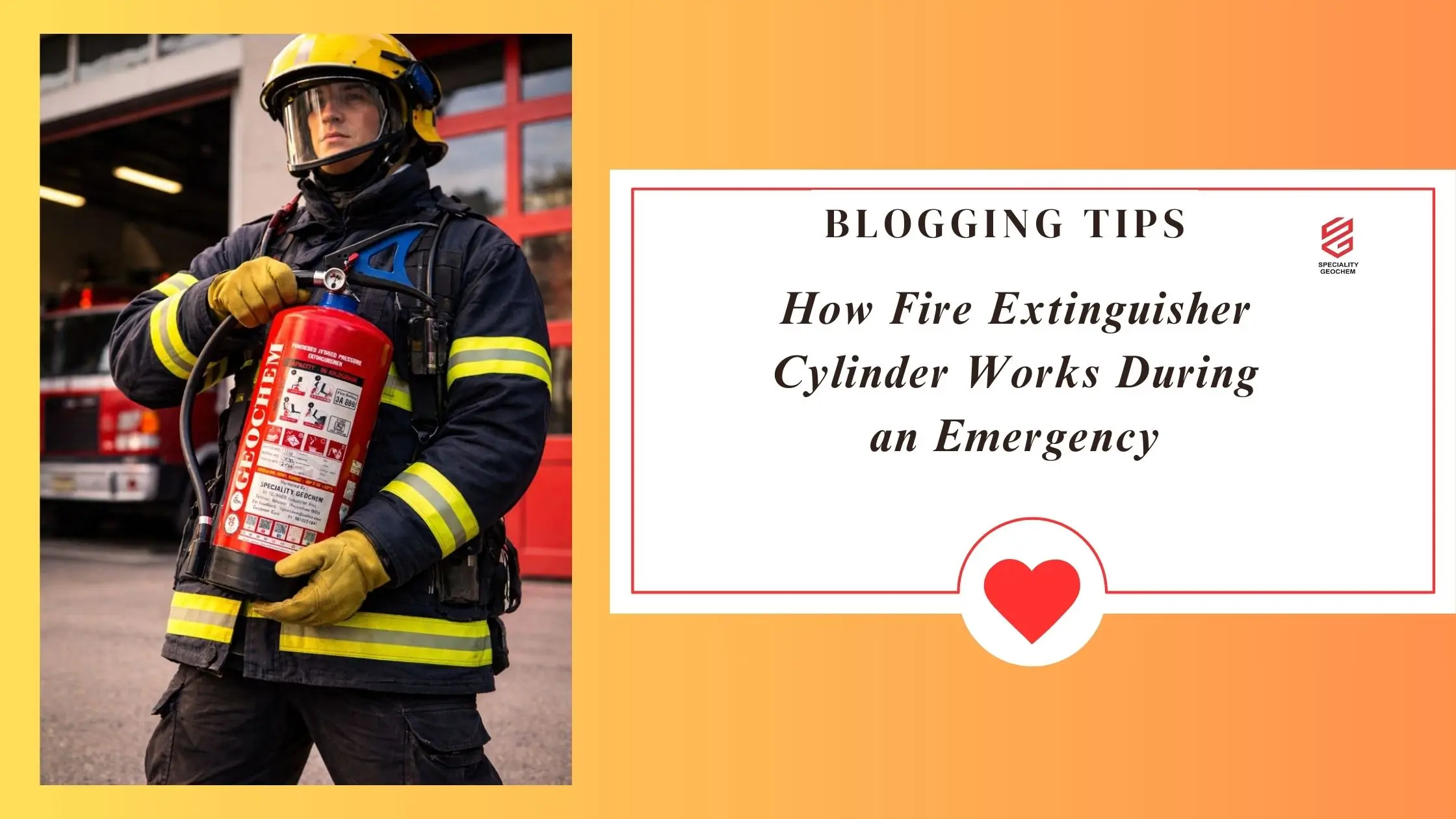
When a fire suddenly breaks out, every second matters. In such moments, having the right fire safety equipment nearby can mean the difference between a small incident and a major disaster. Among the most reliable and widely used firefighting tools is the fire extinguisher cylinder. But have you ever wondered exactly how it functions when you pull the pin and press the handle?
In this detailed guide, we will explain How Fire Extinguisher Cylinder Works During an Emergency, breaking down its internal mechanism, types, and the science behind its operation in simple, practical language.
What Is a Fire Extinguisher Cylinder?
A fire extinguisher cylinder is a pressurized metal container designed to store firefighting agents such as dry powder, carbon dioxide (CO₂), foam, or water. It is built to withstand high internal pressure and release the extinguishing agent quickly when activated.
Most portable cylinders are made of high-quality steel or aluminum and are coated with corrosion-resistant paint. Inside the cylinder, the extinguishing material is stored either in compressed form or under pressure using a propellant gas.
Main Components of a Fire Extinguisher Cylinder
To understand how a Fire Extinguisher Cylinder Works During an Emergency, you must first know its key parts:
- Cylinder Body – The main storage container.
- Pressure Gauge – Indicates whether the unit is properly charged.
- Safety Pin – Prevents accidental discharge.
- Handle/Lever – Used to activate the release mechanism.
- Valve Assembly – Controls the flow of the extinguishing agent.
- Siphon Tube – Carries the agent from bottom to nozzle.
- Nozzle or Hose – Directs the agent toward the fire.
Each component plays a crucial role in ensuring quick and controlled discharge during a fire emergency.
The Science Behind Fire Suppression
Before discussing how a Fire Extinguisher Cylinder Works During an Emergency, it’s important to understand how fires burn.
A fire needs three essential elements:
- Heat
- Fuel
- Oxygen
This combination is known as the Fire Triangle. Some fires also involve a fourth element – a chemical chain reaction – forming the Fire Tetrahedron.
A fire extinguisher cylinder works by removing one or more of these elements:
- Cooling the fire (removing heat)
- Smothering the flames (cutting oxygen)
- Interrupting the chemical reaction
- Removing fuel
Step-by-Step: How Fire Extinguisher Cylinder Works During an Emergency
Let’s break it down into simple steps.
1. Pulling the Safety Pin
The first action during an emergency is pulling the safety pin. This unlocks the handle mechanism and allows you to discharge the contents.
2. Pressing the Handle
When you squeeze the handle:
- The valve opens.
- Internal pressure forces the extinguishing agent upward through the siphon tube.
- The agent exits through the nozzle.
This is the core process that explains How Fire Extinguisher Cylinder Works During an Emergency in real-time situations.
3. Agent Discharge Under Pressure
Inside the cylinder, either compressed air, nitrogen, or stored pressure propels the extinguishing material outward at high speed. This ensures that the agent reaches the base of the fire effectively.
4. Targeting the Base of the Fire
For best results, the nozzle should be aimed at the base of the flames—not the top. This directly attacks the fuel source.
5. Sweeping Motion
Using a side-to-side sweeping motion spreads the agent evenly across the burning area, suppressing the fire quickly.
This complete mechanism clearly demonstrates How Fire Extinguisher Cylinder Works During an Emergency to control flames in the initial stages.
Types of Fire Extinguisher Cylinders and Their Working Mechanism
Different types of cylinders operate on similar principles but use different extinguishing agents.
1. Dry Powder (ABC Type)
- Releases monoammonium phosphate powder.
- Interrupts the chemical reaction of fire.
- Suitable for electrical and flammable liquid fires.
2. CO₂ Fire Extinguisher
- Releases carbon dioxide gas.
- Displaces oxygen around the fire.
- Ideal for electrical fires and server rooms.
3. Foam Fire Extinguisher
- Forms a foam blanket over flammable liquids.
- Cuts off oxygen supply.
- Prevents re-ignition.
4. Water Fire Extinguisher
- Cools the fire by reducing temperature.
- Suitable for Class A fires (paper, wood, cloth).
Regardless of the type, the internal pressure system explains how a Fire Extinguisher Cylinder Works During an Emergency efficiently and instantly.
Stored Pressure vs Cartridge Operated Cylinders
There are two main pressure systems:
Stored Pressure Type
- The extinguishing agent and propellant are stored together.
- Most common in homes and offices.
- Activated instantly when handle is pressed.
Cartridge Operated Type
- Uses a separate gas cartridge.
- When triggered, gas punctures and pressurizes the cylinder.
- Common in industrial settings.
Both systems are engineered to ensure that a Fire Extinguisher Cylinder Works During an Emergency without delay.
Why Pressure Matters in an Emergency
The effectiveness of a fire extinguisher cylinder depends on proper internal pressure. If the gauge shows low pressure:
- The agent may not discharge properly.
- The fire may not be suppressed effectively.
Regular inspection ensures that a Fire Extinguisher Cylinder Works During an Emergency remains reliable when truly needed.
Common Mistakes During Fire Emergencies
Even if you understand how a Fire Extinguisher Cylinder Works During an Emergency, improper usage can reduce its effectiveness.
Avoid these mistakes:
- Standing too close to the fire.
- Aiming at flames instead of base.
- Using wrong extinguisher type.
- Not checking pressure gauge beforehand.
Proper training and awareness make a big difference.
Safety Tips While Using Fire Extinguisher Cylinder
- Always read the instructions beforehand.
- Keep exit route behind you.
- Use the PASS technique:
- Pull
- Aim
- Squeeze
- Sweep
- Evacuate if fire grows beyond control.
These precautions ensure maximum effectiveness when understanding how a Fire Extinguisher Cylinder Works During an Emergency in real scenarios.
Maintenance and Inspection Importance
A fire extinguisher cylinder should be:
- Visually inspected monthly.
- Professionally serviced annually.
- Refilled after every use.
Corrosion, leakage, or low pressure can compromise safety. Routine maintenance ensures that a Fire Extinguisher Cylinder Works During an Emergency remains dependable.
Final Thoughts
Understanding how a fire extinguisher cylinder works during an emergency is more than basic safety knowledge—it is a responsibility that protects lives and property. A well-designed cylinder responds instantly, releasing the extinguishing agent with controlled pressure to stop fire at its source. At Speciality Geochem, we are committed to manufacturing high-quality, reliable fire safety solutions that perform when it matters most. Our fire extinguisher cylinders are built with strict quality standards to ensure durability and efficiency. With proper installation, training, and maintenance, you can stay prepared and confident in handling unexpected fire emergencies safely and effectively.