
Electrical panel fires are among the most dangerous and unpredictable fire hazards in homes, offices, factories, and commercial buildings. A minor spark, overloaded wiring, or short circuit can quickly turn into a serious emergency. In such situations, immediate response is critical. This is where many people ask: Can a Fire Extinguisher Ball Control Electrical Panel Fires?
In this detailed guide, we will explore how Fire Extinguisher Balls work, whether they are effective for electrical panel fires, and how they can enhance overall fire safety systems.
Understanding Electrical Panel Fires
Before answering whether a Fire Extinguisher Ball Control Electrical Panel Fires, it is important to understand how these fires occur.
Electrical panel fires typically start due to:
- Overloaded circuits
- Loose wiring connections
- Short circuits
- Aging electrical components
- Poor maintenance
- Dust accumulation inside panels
Electrical fires are categorized as Class C fires. These fires involve energized electrical equipment and require non-conductive extinguishing agents to prevent electric shock hazards.
Water cannot be used on electrical fires because it conducts electricity and increases risk. That’s why specialized fire suppression solutions are required.
What Is a Fire Extinguisher Ball?
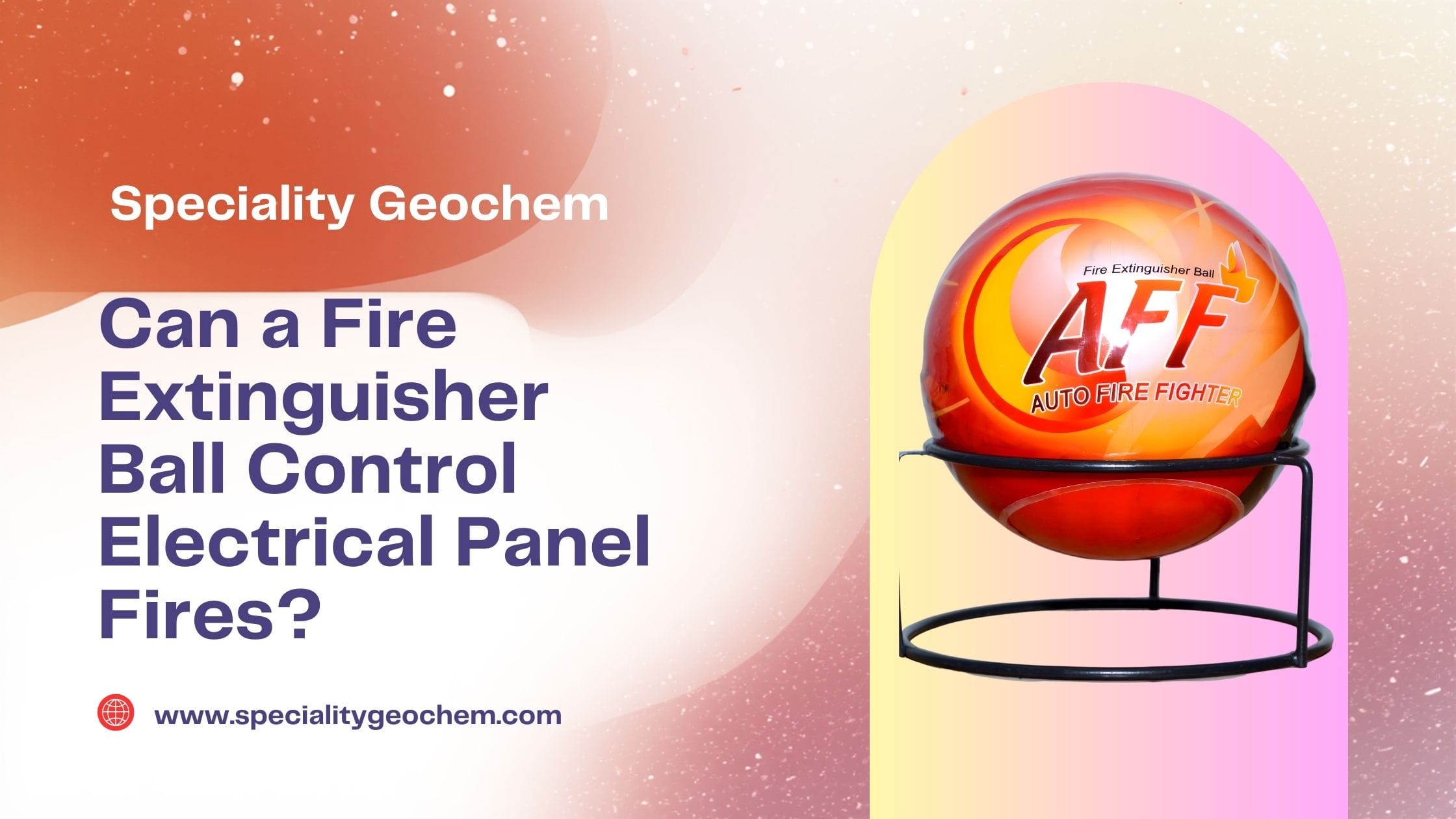
A Fire Extinguisher Ball is a compact, lightweight, automatic fire suppression device designed to activate when exposed to flames. Unlike traditional fire extinguishers, it does not require manual operation.
When the ball comes into contact with fire for a few seconds, it automatically bursts and disperses a dry chemical extinguishing powder over the affected area. This powder interrupts the chemical reaction of the fire and suppresses it quickly.
Fire Extinguisher Balls are commonly used in:
- Electrical panels
- Server rooms
- Warehouses
- Kitchens
- Vehicles
- Industrial machinery
Because they are automatic, they are especially useful in unattended areas.
How Does It Work on Electrical Panel Fires?
Now let’s address the main question: Can a Fire Extinguisher Ball Control Electrical Panel Fires?
Yes, in many cases it can — particularly during the early stage of the fire.
When installed inside or just above an electrical panel, the ball detects direct flame exposure. Within 3 to 10 seconds of contact with fire, it activates and releases non-conductive dry chemical powder.
This powder:
- Smothers flames
- Interrupts combustion
- Prevents fire spread
- Reduces temperature
- Minimizes further electrical damage
Because the extinguishing agent is non-conductive, it is safe for electrical equipment.
So practically speaking, a properly installed Fire Extinguisher Ball Control Electrical Panel Fires by acting immediately without waiting for human intervention.
Why Early Activation Matters
Electrical panel fires spread rapidly due to:
- Continuous power supply
- Plastic insulation materials
- Enclosed cabinet design
The biggest advantage of Fire Extinguisher Balls is automatic response. Traditional extinguishers require someone to:
- Notice the fire
- Reach the location
- Operate the extinguisher
In many industrial settings, fires start at night or during non-working hours. In such cases, automatic systems are critical.
This is why many safety experts recommend Fire Extinguisher Balls as a supplementary protection system.
Key Benefits of Using Fire Extinguisher Balls for Panels
1. Automatic Activation
No human presence is required.
2. Safe for Electrical Equipment
The extinguishing powder is non-conductive.
3. Quick Suppression
Activation happens within seconds of flame contact.
4. Compact Size
Easily fits inside electrical cabinets.
5. Low Maintenance
No complicated servicing is required.
Because of these features, many facility managers believe a Fire Extinguisher Ball Control Electrical Panel Fires effectively when positioned correctly.
Installation Guidelines for Electrical Panels
Proper installation plays a crucial role. To ensure a Fire Extinguisher Ball Control Electrical Panel Fires effectively:
- Install it at the top section inside the panel cabinet
- Ensure it is close to high-risk components
- Avoid blocking ventilation
- Follow manufacturer’s mounting instructions
- Keep it away from excessive vibration
Some industries prefer mounting it just above the panel to allow broader powder dispersion.
Limitations You Should Know
While Fire Extinguisher Balls are highly effective in early-stage fires, they are not designed to replace complete fire protection systems.
Important considerations:
- Best for small to medium fires
- Not suitable for large industrial electrical explosions
- Should be used along with alarms and circuit breakers
- Does not cut off power supply automatically
Therefore, a Fire Extinguisher Ball Control Electrical Panel Fires during initial ignition, but comprehensive safety planning is still necessary.
Comparison with Traditional Fire Extinguishers
| Feature | Fire Extinguisher Ball | Traditional Extinguisher |
| Activation | Automatic | Manual |
| Speed | Immediate (on flame contact) | Depends on human response |
| Installation | Fixed inside panel | Stored nearby |
| Skill Required | None | Basic training required |
| Best Use | Unattended areas | Supervised environments |
In real-life emergencies, speed makes the difference. That is why many engineers consider Fire Extinguisher Balls as preventive protection.
Real-World Application Scenarios
Fire Extinguisher Balls are widely used in:
- Industrial control panels
- Solar inverter panels
- Data centers
- Manufacturing units
- Commercial buildings
For example, in factories where heavy electrical load operates continuously, installing these balls inside panels ensures that if a short circuit sparks a fire, it is suppressed instantly.
This is another scenario where a Fire Extinguisher Ball Control Electrical Panel Fires before the situation escalates.
Are They Approved for Electrical Fires?
Most Fire Extinguisher Balls use ABC dry powder, which is suitable for:
- Class A (solid materials)
- Class B (flammable liquids)
- Class C (electrical equipment)
However, always verify certification standards before installation.
Cost-Effective Fire Safety Solution
Compared to automatic sprinkler systems or gas-based suppression systems, Fire Extinguisher Balls are:
- More affordable
- Easy to install
- Minimal maintenance
- No wiring required
For small businesses, shops, and residential panels, they provide an economical safety layer.
Because of this affordability, many small facility owners prefer them to ensure a Fire Extinguisher Ball Control Electrical Panel Fires without investing in complex infrastructure.
Safety Precautions
- Do not rely solely on one ball for large panels
- Regularly inspect electrical wiring
- Install proper circuit protection
- Combine with smoke detectors
Fire safety works best in layers.
Final Verdict
So, can a Fire Extinguisher Ball Control Electrical Panel Fires?
Yes — especially in early-stage electrical panel fires. Its automatic activation, non-conductive extinguishing powder, and compact design make it a practical solution for electrical cabinets.
However, it should be viewed as a first-response device rather than a complete replacement for integrated fire safety systems.
Conclusion
In conclusion, electrical panel fires demand immediate and reliable protection to prevent costly damage and life-threatening risks. Installing Fire Extinguisher Balls inside or above control panels adds a smart, automatic first-response solution during the most critical early moments of a fire. At Speciality Geochem, we design high-quality Fire Extinguisher Balls that release non-conductive dry powder to safely suppress electrical fires without harming equipment. Though not a replacement for complete fire systems, they act as a powerful preventive safeguard. For industries, commercial spaces, and homes, this simple innovation significantly strengthens electrical fire safety and minimizes unexpected losses.