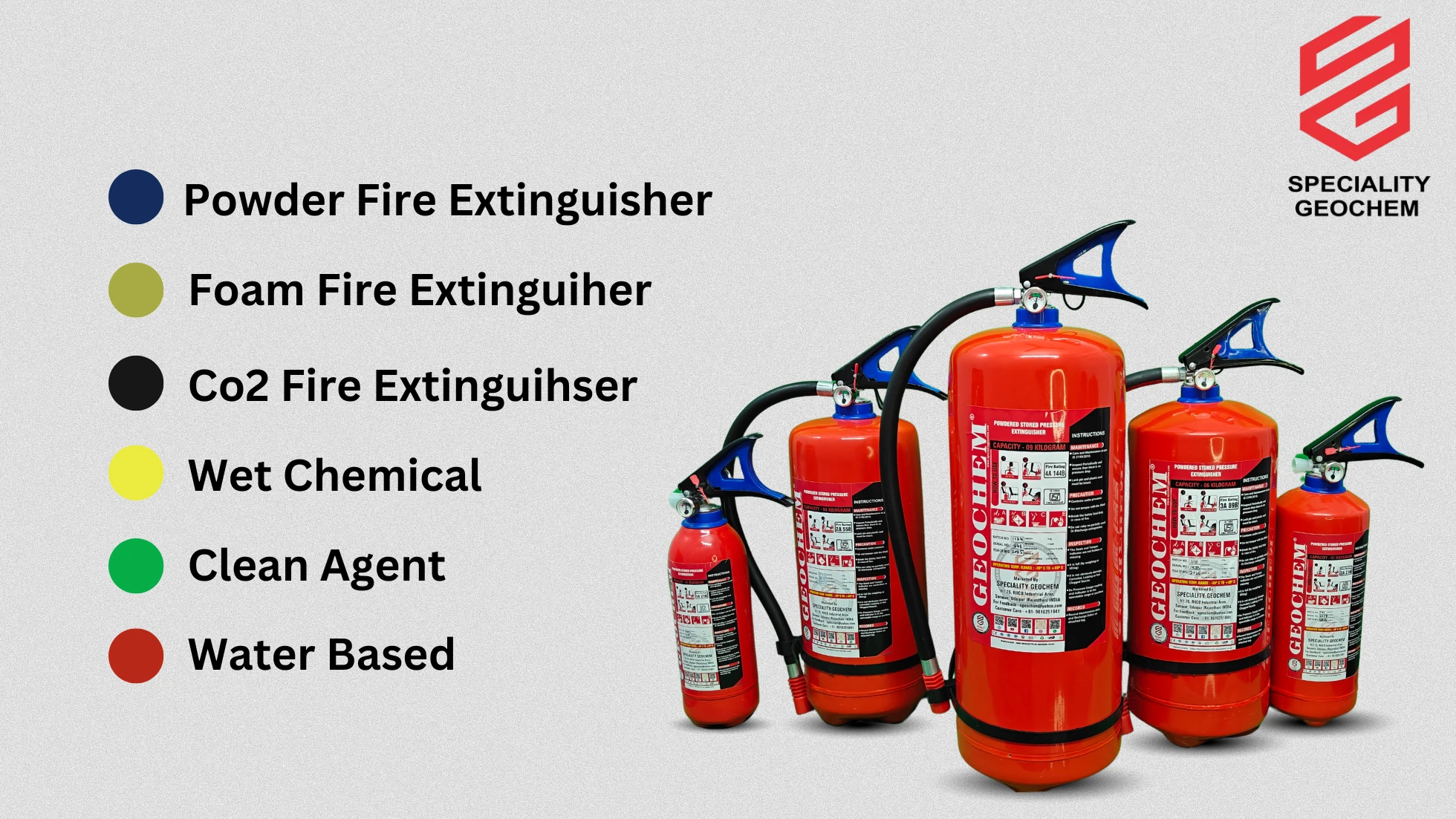
Fire Extinguisher Size Guide for Indian Homes & Offices

Fire Extinguisher Size Guide for Indian Homes & Offices

For homes, a 2–4 kg ABC extinguisher covers most fire risks. Offices need 6–9 kg units placed every 15 metres per IS 2190. Factories require 9–25 kg units or wheeled extinguishers depending on fire class. The right size depends on three things: fire class, room area, and occupancy type.

Most people buy the cheapest extinguisher they can find and mount it on the wall. Then they forget about it.

That works until there is an actual fire.

The wrong extinguisher size does not slow a fire. A 1 kg unit runs out in 8 seconds. A CO2 fire extinguisher cylinder on a paper fire does nothing. A water extinguisher on an electrical fire makes it worse.

This guide gives you the exact sizes, classes, and IS 2190 placement rules for homes, offices, and factories so you make the right choice before a fire, not during one.

Fire Extinguisher Size Chart for India

Use this table to find the right extinguisher for your setting before reading further.

SettingRecommended SizeAgent TypeFire ClassIS 2190 Ref
Small Kitchen (Home)2 kgABC Powder or Wet ChemicalA, B, KClause 5.2
Living Room / Bedroom4 kgABC Dry PowderA, B, CClause 5.2
Office Floor (Up to 200 sq m)6 kgABC Dry PowderA, B, CClause 6.1
Server Room / Data Centre2 to 5 kgCO₂CClause 7.3
Petrol / Chemical Storage9 kgAFFF FoamBClause 8.2
Factory / Warehouse9 to 25 kgABC or FoamA, B, CClause 8.1
Large Industrial Unit25 to 50 kg (wheeled)ABC / FoamA, B, CClause 9
Vehicle (Car / Truck)1 to 2 kgABC Dry PowderA, B, CIS 15683

Note: IS 2190:2010 (reaffirmed 2020) is India’s primary standard for fire extinguisher selection, maintenance, and placement. All size recommendations above align with its requirements.

What the kg Rating Actually Means

The kg number on a fire extinguisher is not the weight of the cylinder. It is the weight of the suppressant agent inside.

A 4 kg ABC dry powder extinguisher holds 4 kilograms of dry chemical powder. That gives you roughly 12–16 seconds of continuous discharge at full pressure.

A 1 kg unit gives you 6–8 seconds. Enough to open a path to an exit. Not enough to put out a kitchen fire that has reached the cabinets.

Here is what discharge time looks like across common sizes:

Extinguisher SizeDischarge TimeCoverage Area (Approx.)
1 kg6 to 8 secondsSmall vehicle / single appliance
2 kg8 to 12 secondsSmall kitchen or home room
4 kg12 to 16 secondsHome floor / office room
6 kg16 to 22 secondsOffice floor / retail space
9 kg25 to 35 secondsFactory section / large hall
25 kg (Wheeled)50 to 60 secondsLarge open industrial area

The practical rule: buy at least one size up from what you think you need. Fires grow faster than discharge time.

Fire Classes: Match the Agent to the Fire

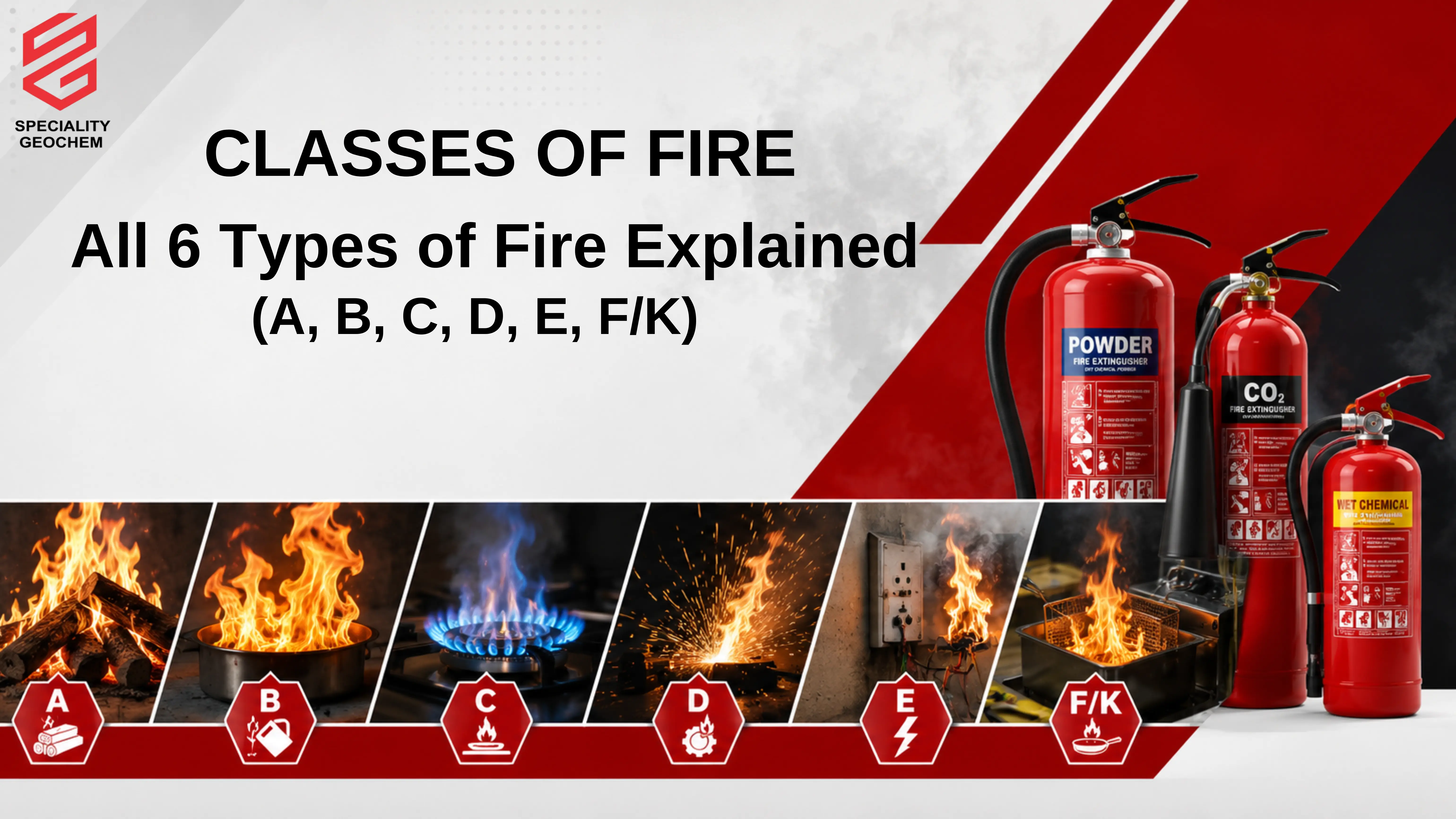
Buying the right size is half the job. Buying the wrong class of fire extinguisher is the other half and it is the more dangerous mistake and choose the right extinguihser according to class of fire.

Class A Ordinary combustibles

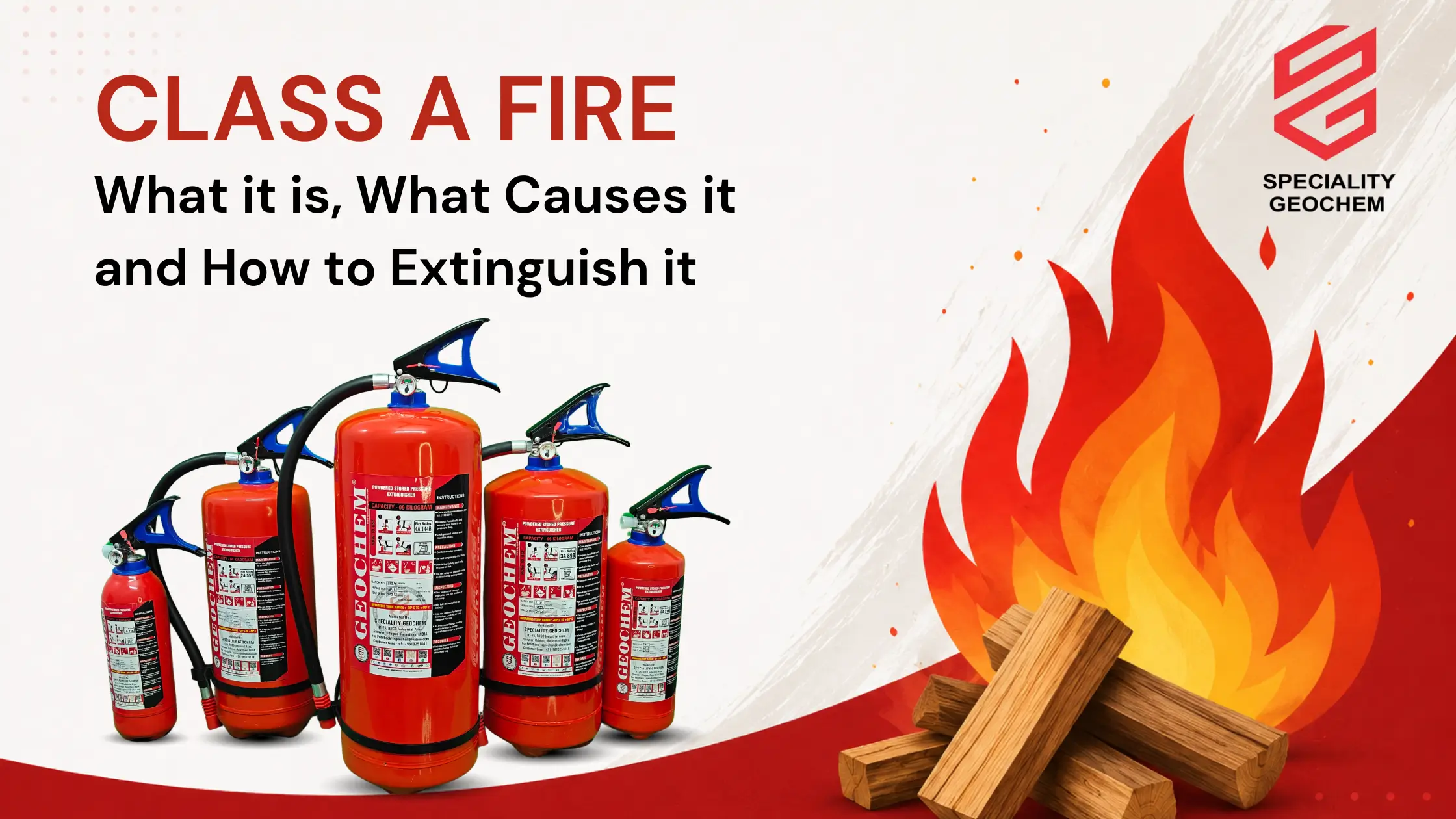
Paper, wood, fabric, plastic. Found in every home, office, and warehouse. ABC dry powder extinguishers handle Class A fires.

Class B Flammable liquids

Petrol, diesel, paint, solvent. Common in garages, factories, and kitchens. Use AFFF foam or ABC powder. Never use water on Class B fires.

Class E Electrical fires

Live electrical equipment, panels, wiring. CO2 extinguishers are the correct choice. They leave no residue and do not conduct electricity and are the right choice for Electrical Fires.

Class D Combustible metals

Magnesium, titanium, lithium. Found in some manufacturing environments. Requires specialist dry powder, not the same as ABC powder.

Class F Kitchen fires

Cooking oil and grease fires. Common in home kitchens and commercial kitchens. Wet chemical extinguishers are the correct choice. Water and standard powder can cause a flashover on oil fires.

ABC Rating: What it means

Most residential and commercial extinguishers carry an ABC rating. This tells you how large a fire that unit can suppress:

  • A rating (e.g. 13A): Water equivalency. A 13A rating equals approximately 13 litres of water suppression capacity.
  • B rating (e.g. 70B): Square metres of flammable liquid fire it can cover.
  • C rating: Confirms suitability for electrical fires, no numerical scale.

A standard 6 kg ABC extinguisher typically carries a 21A:113B:C rating. That is the minimum most office environments require under IS 2190.

Home Fire Extinguisher Sizes: What IS 2190 Says

IS 2190 does not specify separate rules for residential buildings, but the National Building Code 2016 (NBC 2016) does. Combined guidance gives us clear minimum requirements for fire extinguisher for home.

For a standard 2–3 bedroom home:

  • Kitchen: 2 kg ABC powder or 1 kg wet chemical (K-class). Mount near the exit, not above the stove.
  • Living room: 4 kg ABC powder. Mount at 1–1.5 m height near the main door.
  • Garage or car parking: 2 kg ABC. Required for any attached vehicle storage.

If your home uses LPG cylinders, add one 4 kg ABC unit near the kitchen exit. LPG fires are Class B and require powder suppression, not water.

For a home with an electrical panel or inverter room:

Add a 2 kg CO2 extinguisher near the panel. ABC powder is a backup option, but CO2 is cleaner and safer for electrical equipment.

Office Fire Extinguisher Sizes: IS 2190 Placement Rules

IS 2190 Clause 6.1 gives us the exact requirements for commercial and office buildings:

  • Maximum travel distance to any extinguisher: 15 metres for Class A risks.
  • Maximum travel distance for Class B risks (flammable liquids): 9 metres.
  • Minimum rating for general office: 13A:70B:C (typically a 6 kg ABC unit).
  • Floor with more than 5 computers or servers: Add one 2–5 kg CO2 unit.

A 1,000 sq m office floor needs a minimum of 3–4 extinguishers to comply with the 15-metre travel distance rule.

Offices that store paper, files, or stock need a higher A-class rating. A 9 kg ABC unit (rated 27A:144B:C) is appropriate for storage rooms and server rooms combined.

Factory and Industrial Sizing

Factories in India operate under the Factories Act 1948 and must comply with IS 2190 for extinguisher selection. State fire departments may impose additional requirements.

Key rules from IS 2190 Clause 8:

  • Storage areas with flammable liquids need AFFF foam or CO2, not ABC powder.
  • Areas storing more than 50 litres of flammable liquid require wheeled extinguishers of 25 kg or above.
  • Chemical manufacturing units need a dedicated fire risk assessment before selecting extinguisher class and size.

For large open-plan factories, wheeled extinguishers (25–50 kg) are more practical than wall-mounted units. A 50 kg unit gives 50–60 seconds of discharge, enough for a vehicle fire or a large floor spill.

If your factory handles automated machinery or unattended electrical equipment, consider an automatic fire suppression tube system in addition to manual extinguishers. These activate without human intervention when heat reaches a threshold.

What About Fire Extinguisher Balls?

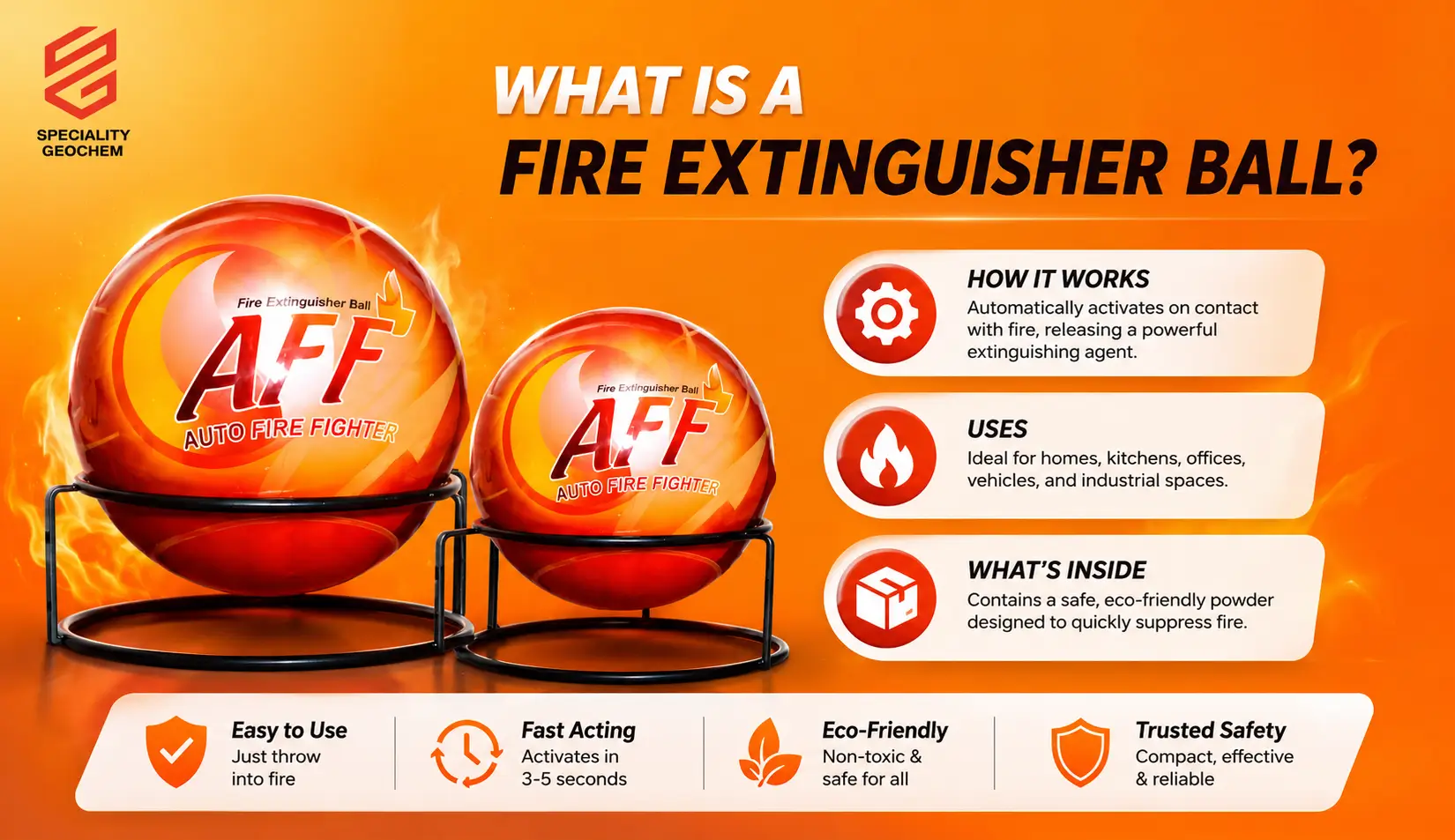
A fire extinguisher ball is a compact, automatic device that activates on contact with fire. It does not require training, physical proximity, or manual operation.

For homes, small offices, and enclosed spaces, server rooms, electrical panels, storage cabinets, vehicle engine bays, a fire extinguisher ball works as a first-response layer alongside a conventional cylinder.

It does not replace a 6 kg or 9 kg unit in a large space. Use it as a supplementary option, not a full substitute.

3 Mistakes People Make When Choosing Extinguisher Size

1. Buying the smallest option to save money

A 1 kg unit costs less but runs out in 8 seconds. Most residential fires need at least 2 kg of suppressant to give meaningful control time. The price difference between 1 kg and 4 kg is roughly ₹300–500. The difference in coverage is your kitchen vs. an open flame near your face.

2. Ignoring fire class and buying ABC for everything

ABC powder works on most fires. But on a cooking oil fire, it does not saponify the oil. It cannot suppress a Class K fire the way wet chemical does. On a CO2 system server room fire, ABC powder leaves residue that destroys equipment. Match the class to the risk.

3. Mounting the extinguisher too high or too far from the exit

IS 2190 requires extinguishers to be mounted at 1–1.5 m height. Mounting above 1.5 m means an injured or panicked person cannot reach it. Mounting inside the kitchen (near the stove) means walking into the fire to reach it. Mount near the exit, at the correct height.

Conclusion

The right fire extinguisher size is not about buying the biggest unit. It is about matching kg rating to room size, matching agent class to fire risk, and placing units per IS 2190 travel-distance rules.

For most Indian homes: 2–4 kg ABC. For offices: 6–9 kg ABC with a CO2 unit near electrical areas. For factories: 9 kg and above, with class matched to the specific hazard.

If you need help selecting the right combination for your building, our team at Speciality Geochem has been manufacturing fire safety equipment since 1996 with ISO 9001, ISO 14001, and BIS certifications. We supply to the Indian Army, Indian Railways, and BSF and we are happy to advise individual buyers too.

Frequently Asked Questions

Q1. What size fire extinguisher is best for home use in India?

For most Indian homes, a 2 kg ABC dry powder extinguisher covers the kitchen and living areas. For larger homes or those with multiple floors, use 4 kg units, one per floor. Kitchens specifically should have a minimum 2 kg unit rated for Class K (cooking oil) fires.

Q2. What does the kg rating on a fire extinguisher mean?

The kg rating refers to the weight of the extinguishing agent inside the cylinder, not the canister itself. A 4 kg ABC extinguisher contains 4 kilograms of dry chemical powder. Higher kg rating means more suppressant and longer discharge time.

Q3. What fire extinguisher class do I need for electrical fires?

Class C extinguishers are rated for electrical fires. CO2 extinguishers are the safest choice for server rooms, panels, and electrical equipment because they leave no residue and are non-conductive.

Q4. What is IS 2190 and how does it guide extinguisher selection in India?

IS 2190 is the Bureau of Indian Standards code of practice for fire extinguisher selection and maintenance. It specifies minimum extinguisher sizes, maximum travel distances (15 metres for Class A, 9 metres for Class B), and placement requirements for different occupancy types.

Q5. How far apart should fire extinguishers be placed in an office?

As per IS 2190, no point in a building should be more than 15 metres from a fire extinguisher rated for Class A fire risks. For high-risk areas with flammable liquids (Class B), that distance reduces to 9 metres.