
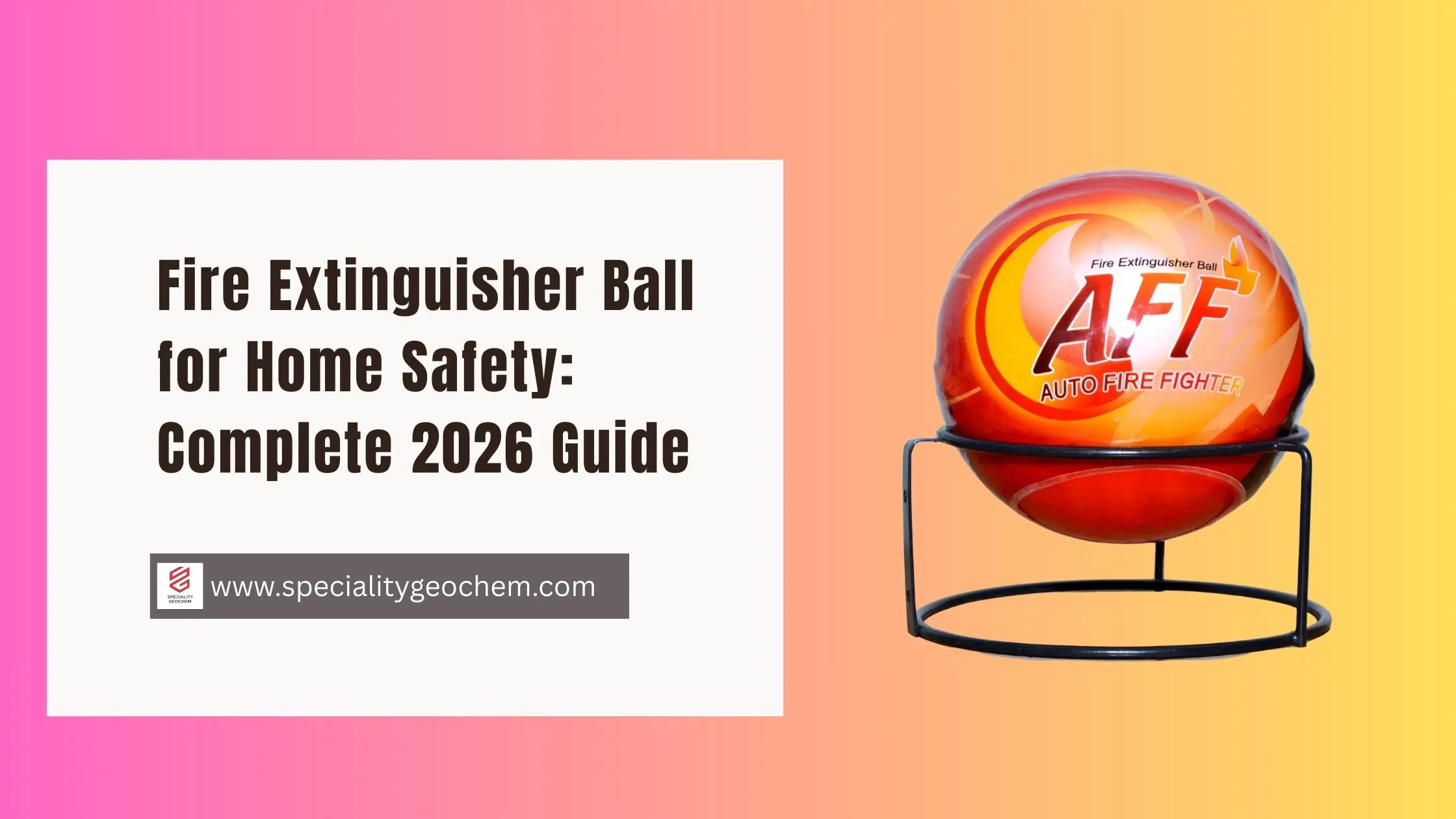
Fire Extinguisher Ball for Home Safety: Home safety is no longer limited to installing CCTV cameras or strong door locks. In 2026, families are becoming more aware of fire risks inside kitchens, living rooms, electrical panels, and even parking areas. Small electrical sparks, gas leaks, overloaded extension boards, and unattended candles can turn into serious emergencies within seconds. That is why many homeowners are now exploring the Fire Extinguisher Ball for Home Safety as a practical and easy-to-use protection solution.
Unlike traditional fire extinguishers that require training and physical strength, this modern device is designed for simplicity. It activates automatically when it comes in contact with flames, making it suitable for children, elderly family members, and anyone who may panic during a fire incident.
In this complete 2026 guide, we will explore how it works, where to install it, its benefits, maintenance tips, and whether it is the right choice for your home.
Understanding Fire Risks Inside Modern Homes
Today’s homes are filled with electrical appliances—microwaves, induction cooktops, air conditioners, refrigerators, washing machines, laptops, and phone chargers. While these devices improve comfort, they also increase fire risk.
Common causes of residential fires include:
- Short circuits due to faulty wiring
- Overloaded power sockets
- LPG gas leakage in kitchens
- Inverter or battery overheating
- Decorative lighting overheating
- Children playing with fire sources
Many homeowners underestimate how quickly a small flame can spread. Within three to five minutes, a minor spark can grow into a life-threatening blaze. This is where preventive tools play a major role.
What Is a Fire Extinguisher Ball?
A fire extinguisher ball is a lightweight spherical device filled with dry chemical powder. When exposed to flames for a few seconds, it bursts automatically and releases extinguishing powder over the fire source.
There is no need to pull a pin, press a lever, or aim at the base of the fire. The activation happens on its own once it detects sufficient heat from direct flames.
This automatic response is what makes it different from conventional extinguishers.
Why Choose Fire Extinguisher Ball for Home Safety in 2026?
The demand for Fire Extinguisher Ball for Home Safety has increased significantly in recent years. Here’s why homeowners prefer it:
1. Automatic Activation
In panic situations, people often freeze or forget how to operate safety equipment. Since this device activates automatically, it removes human error from the equation.
2. Lightweight and Easy to Handle
Most models weigh between 1 to 1.5 kilograms. Even a child can lift and throw it toward a fire if required.
3. No Maintenance Stress
Unlike traditional extinguishers that require pressure checks and servicing, fire extinguisher balls usually have long shelf lives with minimal maintenance.
4. Wide Coverage
Once activated, the powder spreads in a circular radius, covering a broader area instantly.
5. Safe for Indoor Use
The chemical powder used is generally non-toxic and safe for residential spaces when used as directed.
Where Should You Install It at Home?
Correct placement ensures maximum effectiveness. Consider installing it in the following areas:
Kitchen
The kitchen is the most common fire zone. Place it near the stove area but away from direct heat exposure.
Electrical Distribution Board
Mount it close to the main switchboard to handle electrical sparks quickly.
Living Room
If you use decorative candles or heavy electrical devices, keep one nearby.
Parking Area or Garage
Vehicles and stored fuel increase fire risk.
Near Inverters or Battery Systems
Overheating batteries can cause sudden flames.
Strategic placement ensures that flames come into contact with the device quickly if a fire starts.
How Does It Work?
The working mechanism is surprisingly simple:
- The ball is placed or mounted in a fire-prone area.
- When flames touch its outer surface, a chemical fuse activates.
- Within a few seconds, it bursts with a loud sound.
- Dry chemical powder spreads over the flames.
- The fire is suppressed by cutting off oxygen and interrupting the combustion process.
Because it does not depend on manual operation, it offers faster initial response compared to searching for a traditional extinguisher during panic.
Comparing Traditional Extinguishers and Fire Balls
| Feature | Traditional Extinguisher | Fire Extinguisher Ball |
| Operation | Manual | Automatic |
| Training Required | Yes | No |
| Weight | Heavier | Lightweight |
| Maintenance | Regular servicing | Minimal |
| Panic-Friendly | Moderate | High |
While traditional extinguishers are still important, many homeowners now use both systems together for layered protection.
Real-Life Practical Scenarios
Imagine a small kitchen oil fire starting when no one is nearby. If a fire extinguisher ball is mounted above the stove area, the flames will activate it automatically, possibly controlling the fire before it spreads.
In another scenario, a child notices flames near an electrical socket. Instead of handling a heavy extinguisher, they can simply throw the ball toward the fire from a safe distance.
These simple response options make Fire Extinguisher Ball for Home Safety highly practical for everyday families.
Is It Suitable for All Types of Fire?
Most fire extinguisher balls are effective against:
- Class A fires (wood, paper, cloth)
- Class B fires (flammable liquids)
- Class C fires (electrical equipment)
However, always check product specifications before purchasing. Not all models are designed for industrial or large-scale fires.
For larger homes, combining it with smoke detectors and traditional extinguishers is recommended.
Maintenance and Shelf Life
One of the major advantages of a fire extinguisher ball is its long operational life, typically up to five years depending on the brand.
Maintenance tips include:
- Keep it away from moisture
- Avoid direct long-term exposure to sunlight
- Inspect visually for cracks or damage
- Replace after activation
There is no pressure gauge or complicated inspection process, which makes ownership stress-free.
Cost vs. Safety: Is It Worth It?
When compared to property damage, medical expenses, and emotional trauma caused by house fires, the investment is minimal.
Insurance claims can be complicated and time-consuming. Preventing damage in the first place is always more practical than recovering from loss.
In 2026, proactive safety planning is becoming part of responsible homeownership. Adding protective tools is no longer optional—it’s essential.
Smart Safety Planning for Families
Modern families are creating layered safety systems that include:
- Smoke detectors
- Fire alarms
- Emergency exit plans
- Traditional extinguishers
- Automatic suppression tools
In this safety framework, the Fire Extinguisher Ball for Home Safety acts as a first-response layer. It reacts instantly, even when no one is present in the room.
Teaching children about fire safety and showing them how the device works (without activating it) can also build confidence.
Final Thoughts
In conclusion, fire safety should never be an afterthought. At Speciality Geochem, we believe prevention is the strongest form of protection. By adopting innovative solutions like the Fire Extinguisher Ball, households can ensure faster response during emergencies without relying solely on manual intervention. Our mission is to provide reliable, easy-to-use fire safety products that safeguard families, property, and peace of mind. As safety standards evolve in 2026 and beyond, choosing trusted and quality-driven fire protection solutions becomes essential. Stay prepared, stay protected — because a safer home begins with proactive fire readiness.
– FAQs –
1. How is a Fire Extinguisher Ball for Home Safety different from a traditional fire extinguisher?
A Fire Extinguisher Ball for Home Safety activates automatically when it comes into contact with flames, whereas traditional fire extinguishers require manual operation. Conventional extinguishers need users to pull a pin, aim correctly, and press a lever. In contrast, the fire ball bursts on its own and spreads dry chemical powder over the fire, making it easier to use during panic situations.
2. Can a Fire Extinguisher Ball be used in kitchens and near electrical panels?
Yes, most fire extinguisher balls are designed to handle Class A (wood, paper), Class B (flammable liquids), and Class C (electrical) fires. This makes them suitable for kitchens, electrical distribution boards, garages, and inverter areas. However, it is always recommended to check the product specifications before installation to ensure compatibility with your intended usage area.
3. Is the powder inside the Fire Extinguisher Ball safe for indoor home use?
The dry chemical powder used in most Fire Extinguisher Ball for Home Safety models is generally non-toxic and safe for residential environments when used as directed. After activation, proper ventilation and cleaning are advised to remove residue. While safe, it should not be intentionally inhaled, and basic cleaning precautions should be followed.
4. How long does a Fire Extinguisher Ball last, and does it require maintenance?
Typically, a fire extinguisher ball has a shelf life of up to five years, depending on the manufacturer. It requires minimal maintenance compared to traditional extinguishers. There is no pressure gauge to monitor. Homeowners should simply keep it away from moisture, avoid direct sunlight exposure, and inspect it periodically for visible damage.
5. Is a Fire Extinguisher Ball enough for complete home fire protection?
While a Fire Extinguisher Ball for Home Safety provides an excellent first-response solution, it should ideally be part of a layered safety system. Combining it with smoke detectors, fire alarms, emergency exit planning, and traditional fire extinguishers ensures better overall protection for modern homes in 2026.