
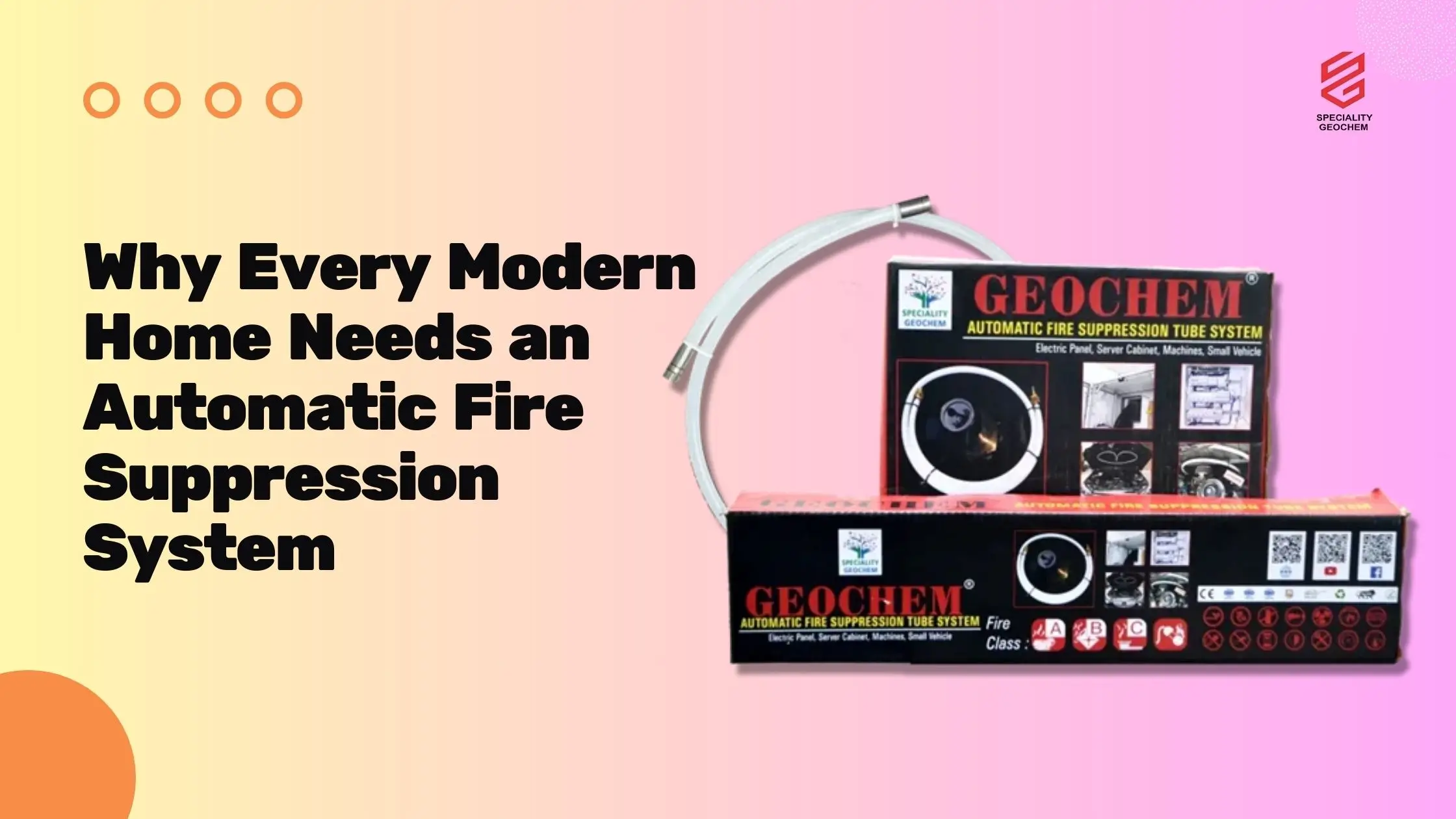
Automatic Fire Suppression System for Modern Homes: Fire accidents inside residential spaces are no longer rare incidents limited to factories or commercial buildings. With increasing electrical appliances, modular kitchens, smart devices, and continuous power usage, modern homes face higher fire risks than ever before. A small spark from faulty wiring, an unattended cooking flame, or overheating equipment can quickly escalate into a dangerous situation within minutes.
Homeowners today are focusing not only on comfort and aesthetics but also on safety preparedness. Traditional fire extinguishers remain useful, but they often depend on human response during emergencies. In many real-life situations, fires spread before anyone can react. This is where an automatic fire suppression system for home becomes an essential safety investment rather than an optional upgrade.
Understanding Modern Fire Risks in Residential Spaces
Modern homes contain multiple fire-triggering elements operating simultaneously. Air conditioners, charging stations, inverter systems, kitchen appliances, and decorative lighting continuously draw electrical power. Even high-quality systems can fail due to overload, aging wiring, or unexpected short circuits.
Unlike commercial spaces, residential fires often start silently — behind walls, inside electrical panels, or near cooking areas. Smoke detection alone may provide alerts, but alerts do not stop flames. Immediate suppression is required to prevent damage.
An automatic fire suppression system for home works proactively by detecting heat or flames and activating fire control mechanisms without waiting for manual intervention. This instant response dramatically reduces fire spread during the most critical early moments.
What Is an Automatic Fire Suppression System?
An automatic fire suppression system is designed to detect and control fire automatically at its origin point. These systems operate using temperature-sensitive technology, specialized suppression agents, or pressurized extinguishing mechanisms.
Once abnormal heat levels or flames are detected, the system activates instantly, releasing fire-suppressing material directly onto the affected area. This process helps contain or extinguish the fire before it becomes uncontrollable.
Unlike handheld extinguishers that require training and quick action, an automatic fire suppression system for home functions even when residents are asleep, away, or unaware of the danger.
Why Traditional Fire Protection Is No Longer Enough
Many homeowners rely solely on smoke alarms or portable extinguishers. While these tools are important, they depend heavily on human reaction time. During emergencies, panic, delayed awareness, or physical limitations can reduce effectiveness.
Consider common situations:
- A kitchen fire starting late at night
- Electrical sparks inside distribution boards
- Fire outbreaks when the house is locked
- Elderly or children unable to respond quickly
In such cases, automated protection becomes the difference between minor damage and complete property loss. Installing an automatic fire suppression system for home ensures protection even when no one is present to take action.
Key Benefits of Installing Automatic Fire Suppression
1. Immediate Fire Control
The biggest advantage is rapid response. Fires grow exponentially within minutes, but automated systems activate almost instantly after detection.
2. Protection During Absence
Many residential fires occur when homeowners are away. Automated suppression safeguards property 24/7 without supervision.
3. Reduced Property Damage
Early suppression prevents flames from spreading to furniture, wiring, and structural components, minimizing repair costs.
4. Enhanced Family Safety
Automatic systems reduce smoke generation and flame intensity, providing safer evacuation conditions.
5. Peace of Mind
Knowing that protection works continuously allows homeowners to focus on daily life without constant safety concerns.
These advantages make an automatic fire suppression system for home a practical safety solution for modern living environments.
Ideal Areas in Homes for Installation
Automatic fire suppression systems can be strategically installed in high-risk zones, including:
- Modular kitchens
- Electrical panels and inverter rooms
- Server or workstation setups
- Parking garages
- Storage rooms
- Air-conditioning units
Targeted installation ensures fires are controlled exactly where they are most likely to begin.
Smart Homes Demand Smart Fire Safety
As homes become smarter with automation, IoT devices, and energy-efficient systems, fire protection must also evolve. Smart homes integrate surveillance, lighting control, and climate automation — yet many still overlook automated fire protection.
An automatic fire suppression system for home complements smart living by adding intelligent safety infrastructure. Modern systems can operate independently or integrate with alarm systems to notify homeowners instantly.
Safety technology is no longer limited to industrial applications; it has become a residential necessity.
Cost vs. Long-Term Value
Some homeowners hesitate due to perceived installation costs. However, when compared to potential losses caused by fire damage, automated suppression systems offer exceptional value.
A single fire incident can result in:
- Structural repairs
- Replacement of electronics and furniture
- Temporary relocation expenses
- Emotional stress and safety risks
Investing in prevention is significantly more economical than recovery. Over time, an automatic fire suppression system for home proves to be one of the most cost-effective safety upgrades available.
Easy Maintenance and Reliable Operation
Modern suppression systems are designed for minimal maintenance. Periodic inspection and basic servicing ensure continued readiness. Unlike complex industrial setups, residential systems are compact, user-friendly, and long-lasting.
Once installed correctly, they remain operational for years, providing continuous protection without daily attention.
Supporting Fire Safety Awareness at Home
Installing automated systems also promotes responsible safety awareness among family members. Children and elderly residents benefit from environments where protection does not rely solely on human action.
When combined with safe electrical practices and emergency planning, automated suppression forms a complete residential fire safety strategy.
The Future of Residential Fire Protection
Urban expansion, apartment living, and energy-dependent lifestyles are reshaping safety requirements worldwide. Fire protection standards are gradually shifting toward preventive automation rather than reactive measures.
Insurance providers, builders, and safety experts increasingly recommend automated suppression technologies for residential projects. Future-ready homes will likely treat fire suppression systems as standard infrastructure — similar to security cameras or smoke detectors.
Conclusion
At Speciality Geochem, we believe that true home safety begins with proactive fire protection solutions. Installing an automatic fire suppression system ensures continuous protection without depending on manual action during emergencies. Modern homeowners are increasingly choosing smart safety systems that respond instantly to potential fire risks, minimizing damage and protecting lives. By integrating advanced fire safety technology into residential spaces, families can live with greater confidence and security. Investing in reliable automated fire protection today is a practical step toward creating safer, smarter, and more resilient homes for the future.
FAQs – Automatic Fire Suppression System for Modern Homes
1. What is an automatic fire suppression system for home use?
An automatic fire suppression system for home is a safety solution that detects fire or abnormal heat and automatically releases fire-controlling agents to suppress flames without requiring manual operation.
2. How does an automatic fire suppression system work inside residential spaces?
The system continuously monitors temperature or fire conditions. When heat or flames exceed safe limits, it activates instantly and suppresses fire at the source before it spreads further.
3. Is an automatic fire suppression system suitable for apartments and small homes?
Yes, modern systems are compact and designed specifically for residential environments, making them ideal for apartments, villas, and independent houses.
4. Where should an automatic fire suppression system be installed in a home?
High-risk areas such as kitchens, electrical panels, inverter rooms, parking areas, server setups, and air-conditioning units are the most recommended installation locations.
5. Can the system control fire when nobody is at home?
Yes. One of the biggest advantages is 24/7 automatic protection. The system activates even when residents are asleep, travelling, or away from home.
6. Does an automatic fire suppression system replace traditional fire extinguishers?
No, it complements traditional extinguishers. While extinguishers require human action, automatic systems provide immediate response during the critical early stage of fire.
7. Is maintenance required for residential fire suppression systems?
Maintenance requirements are minimal. Periodic inspection and basic servicing ensure the system remains fully functional for long-term protection.
8. Are automatic fire suppression systems safe for family members and electronics?
Yes, residential systems are designed using controlled suppression agents that help extinguish fire while minimizing damage to occupants, appliances, and property.
9. Is installing an automatic fire suppression system expensive?
The initial investment is relatively small compared to potential losses caused by fire damage, making it a cost-effective long-term safety solution.
10. Why are modern homes increasingly adopting automatic fire suppression systems?
With increasing electrical usage, smart devices, and modular kitchens, fire risks have grown. Automated suppression systems provide instant protection, improved safety, and peace of mind for modern homeowners.