
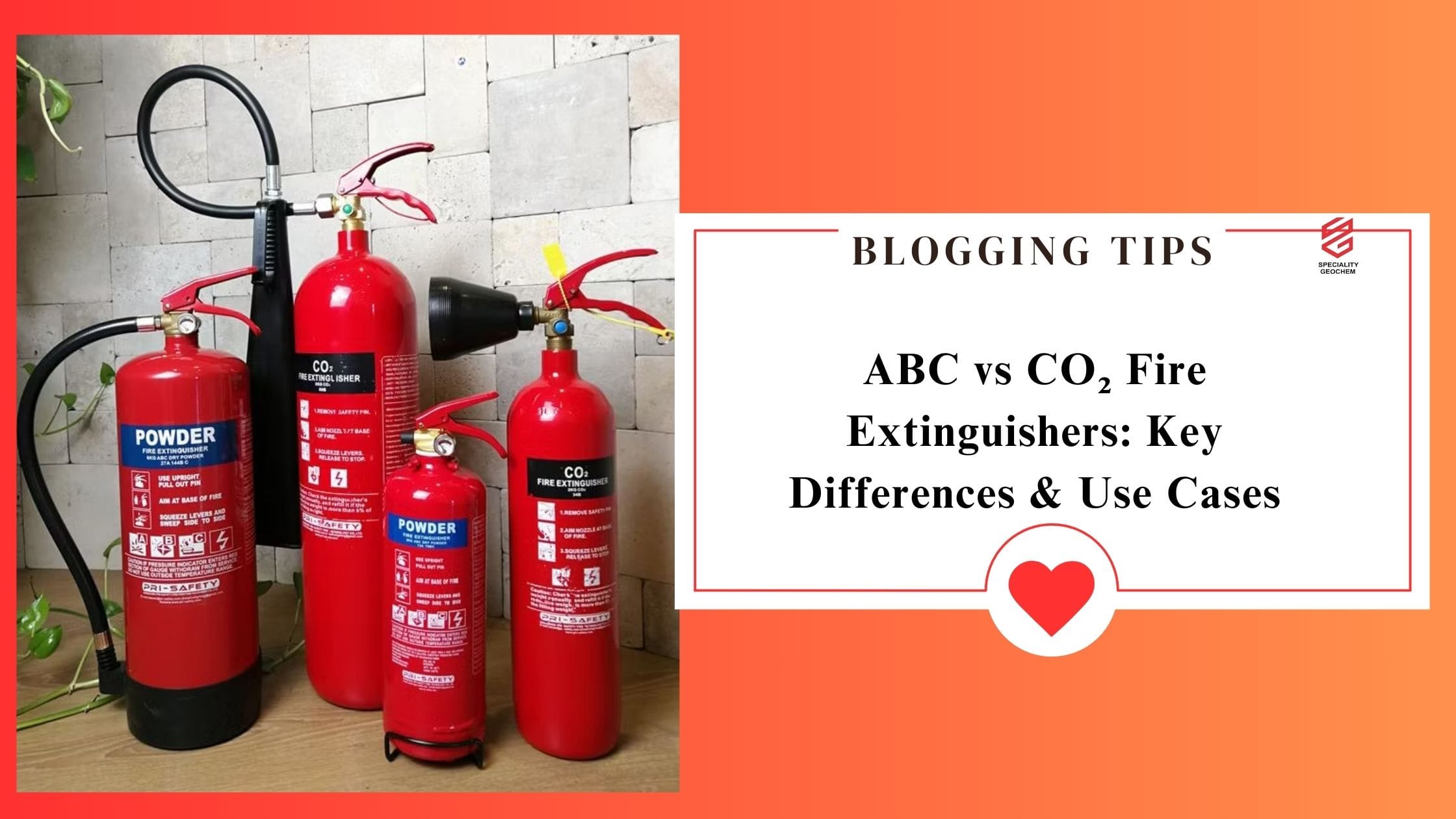
ABC vs CO₂ Fire Extinguishers: Fire safety is not just about installing extinguishers—it’s about choosing the right type for the right risk. One of the most common questions people ask is about ABC vs CO₂ Fire Extinguishers: Key Differences & Use Cases. While both are widely used, they serve very different purposes, and using the wrong one can be ineffective—or even dangerous.
In this detailed guide, we’ll break down how ABC and CO₂ fire extinguishers work, where they should be used, their advantages, limitations, and how to decide which one fits your environment best.
Understanding Fire Classes (The Basics)
Before comparing extinguishers, it’s important to understand fire classifications:
- Class A – Solid materials like wood, paper, cloth, plastic
- Class B – Flammable liquids like petrol, diesel, oils, paints
- Class C – Flammable gases (LPG, CNG, propane)
- Class E – Electrical fires (non-official class, commonly used in India)
The core difference in ABC vs CO₂ Fire Extinguishers: Key Differences & Use Cases lies in how many of these fire classes they can safely handle.
What Is an ABC Fire Extinguisher?
An ABC fire extinguisher uses dry chemical powder, usually monoammonium phosphate. This powder works by:
- Smothering the fire
- Interrupting the chemical reaction
- Creating a barrier between fuel and oxygen
Fires It Can Handle
- Class A (solids)
- Class B (liquids)
- Class C (gases)
- Electrical fires (safe when used correctly)
Because of its wide coverage, ABC extinguishers are often called multipurpose fire extinguishers.
Common Places Where ABC Is Used
- Homes and apartments
- Offices and commercial buildings
- Shops and retail stores
- Warehouses and factories
- Schools and hospitals
What Is a CO₂ Fire Extinguisher?
CO₂ (Carbon Dioxide) fire extinguishers work differently. Instead of powder, they release pressurised carbon dioxide gas, which:
- Displaces oxygen around the fire
- Rapidly cools the burning area
Fires It Can Handle
- Class B (flammable liquids)
- Electrical fires
CO₂ extinguishers do not work on Class A fires because they do not cool solid materials enough to prevent re-ignition.
Common Places Where CO₂ Is Used
- Server rooms and data centres
- Electrical panels and control rooms
- Laboratories
- UPS rooms
- Industrial machinery areas
This functional contrast is central to understanding ABC vs CO₂ Fire Extinguishers: Key Differences & Use Cases.
ABC vs CO₂ Fire Extinguishers: Key Differences & Use Cases (Side-by-Side)
| Feature | ABC Fire Extinguisher | CO₂ Fire Extinguisher |
| Fire Classes | A, B, C + Electrical | B + Electrical |
| Agent Used | Dry chemical powder | Carbon dioxide gas |
| Residue After Use | Yes (powder residue) | No residue |
| Safe for Electronics | Not ideal (powder damage) | Excellent |
| Re-ignition Risk | Low | Higher for Class A |
| Visibility During Use | Reduced due to powder cloud | Clear visibility |
| Ideal Locations | General areas | Electrical & sensitive zones |
This table summarises the real-world comparison behind ABC vs CO₂ Fire Extinguishers: Key Differences & Use Cases.
Advantages of ABC Fire Extinguishers
- Versatile: One extinguisher covers multiple fire types
- Cost-effective: Usually cheaper than specialised extinguishers
- High knockdown power: Quickly controls spreading fires
- Widely recommended for general fire safety compliance
Limitations
- Leaves powder residue that can damage electronics
- Cleanup can be time-consuming
- Not ideal for precision environments
Advantages of CO₂ Fire Extinguishers
- No residue – perfect for electronics
- Non-conductive, making it safe for live electrical fires
- Fast discharge, quickly reducing oxygen
Limitations
- Not suitable for Class A fires
- Risk of re-ignition if fuel remains hot
- Less effective outdoors due to gas dispersion
- Can cause cold burns if mishandled
These pros and cons further clarify ABC vs CO₂ Fire Extinguishers: Key Differences & Use Cases in practical terms.
Which One Should You Choose?
Choose ABC Fire Extinguisher If:
- You want all-round protection
- The area includes paper, furniture, fabrics, or packaging
- It’s a home, shop, office, or warehouse
- You need a single extinguisher for multiple risks
Choose CO₂ Fire Extinguisher If:
- The area has computers, servers, or electrical panels
- You want zero residue after fire suppression
- Fires are likely electrical or liquid-based
- Equipment damage must be minimised
In many commercial buildings, the safest strategy is to install both—ABC for general areas and CO₂ for electrical zones. This balanced approach perfectly addresses ABC vs CO₂ Fire Extinguishers: Key Differences & Use Cases.
Installation & Safety Tips
- Always mount extinguishers at visible and accessible points
- Ensure clear signage above each unit
- Train staff or family members on proper usage
- Conduct periodic inspections and refilling
- Never use CO₂ in confined spaces without ventilation
Correct installation matters just as much as selecting between ABC vs CO₂ Fire Extinguishers: Key Differences & Use Cases.
Final Thoughts
Fire safety is most effective when the right equipment meets the right risk. At Speciality Geochem, we believe that understanding the difference between ABC and CO₂ fire extinguishers is the foundation of a strong fire prevention strategy. ABC Fire extinguishers offer versatile protection for common fire hazards, making them ideal for homes, offices, and mixed-use spaces. CO₂ extinguishers, on the other hand, are essential for electrical rooms, server areas, and environments with sensitive equipment. A well-informed choice not only reduces property and equipment damage but also protects lives. Thoughtful fire safety planning today ensures a safer, more resilient tomorrow.