
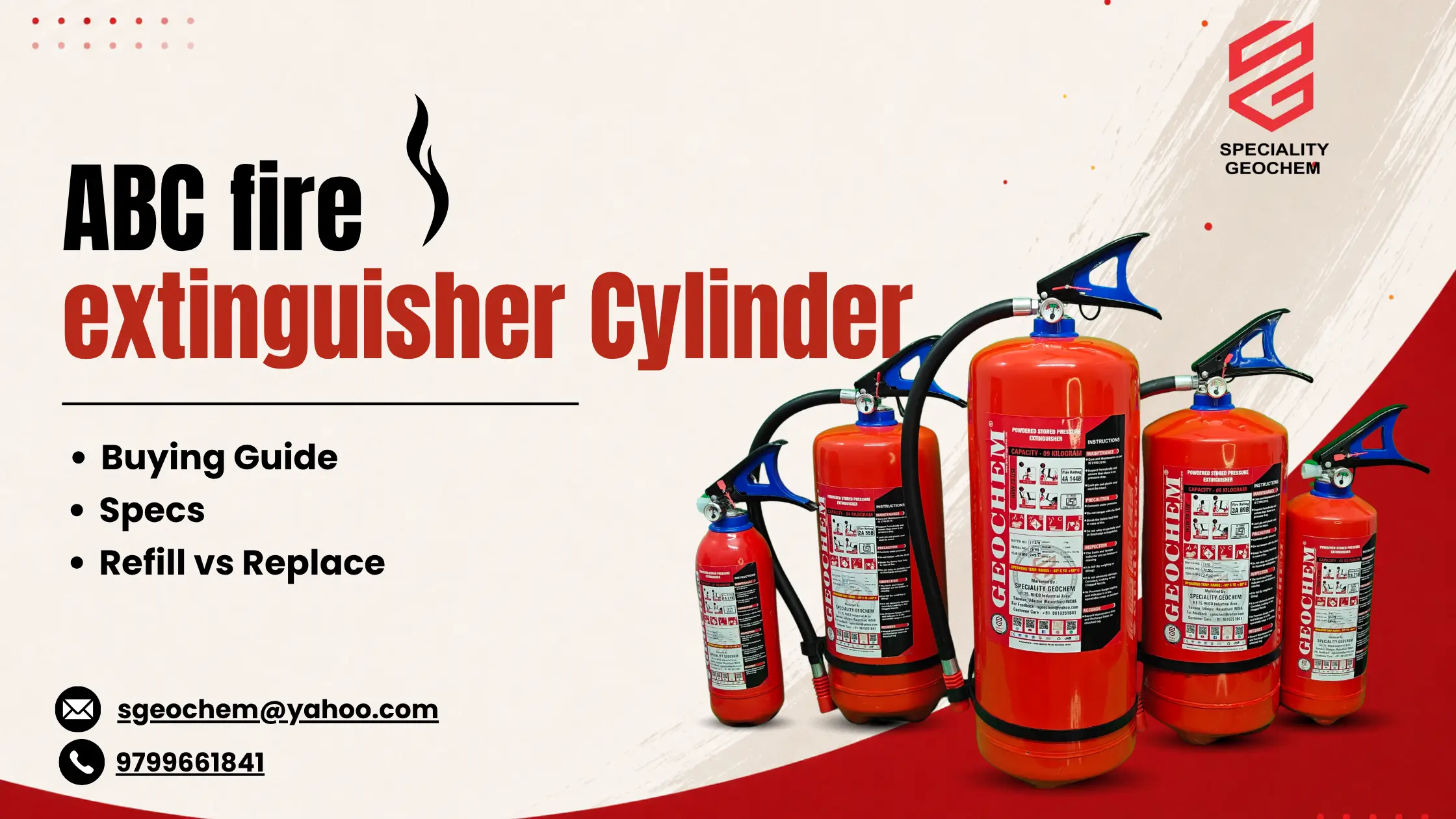
An ABC fire extinguisher cylinder is the pressure vessel that holds monoammonium phosphate powder and nitrogen propellant. In India, it is made from cold-rolled mild steel or aluminium, manufactured under IS 2171, and must pass a hydrostatic test at 1.5 times working pressure before sale. A cylinder typically lasts 10 to 15 years before mandatory replacement, regardless of how well it has been serviced.
What the Cylinder Actually Does (And What It Doesn’t)
The ABC fire Extinguisher Cylinder is the steel or aluminium shell. It’s not the part that puts out the fire. That’s the monoammonium phosphate powder inside it. The cylinder’s job is narrower: hold the powder and propellant safely under pressure, and release it cleanly through the valve when the lever is squeezed.
This distinction matters when you’re buying. People often ask for “a new ABC fire extinguisher cylinder” when what they actually need is a powder refill, or vice versa. The cylinder shell, the valve assembly, and the powder charge are three separate components with three separate service lives. Confusing them leads to either overpaying for a full replacement or under-servicing a unit that’s actually due for one.
For how the powder itself extinguishes a fire, see our full guide to how ABC fire extinguishers work.
Abc Fire Extinguisher Cylinder Material: Mild Steel vs Aluminium
Indian manufacturers build ABC cylinders from one of two materials.
Cold-rolled mild steel (CRCA) is the standard choice for portable units from 1 kg to 9 kg. It’s cheaper, widely available, and meets IS 2171 requirements for wall thickness and burst pressure. Steel cylinders are heavier, which is rarely an issue for wall-mounted or floor-standing units.
Aluminium shows up in specialised applications, aviation-adjacent facilities, marine use, or anywhere weight matters more than cost. Aluminium resists corrosion better in humid or coastal sites but costs significantly more per unit and is harder to source for routine replacement in India.
For nearly all home, office, and factory installations, mild steel is the correct and standard specification. Ask for aluminium only if your environment has a documented reason for it.
IS 2171: The Standard That Governs the Shell
IS 2171 (“Specification for portable fire extinguishers, water type (gas pressure)” and its referenced clauses for dry powder cylinders) sets the minimum requirements for cylinder construction: wall thickness, weld quality, working pressure rating, and burst pressure margin.
A compliant cylinder is built to withstand at least 1.5 times its rated working pressure without failure, with the actual burst point well beyond that. The cylinder body must carry a permanent stamp showing the manufacturing date, working pressure, and test pressure. Check for this stamp near the base or neck of the cylinder before accepting delivery.
This is separate from IS 15683:2018, which governs the complete extinguisher unit’s performance, and IS 14609, which governs the powder. A cylinder can meet IS 2171 and still be paired with non-compliant powder or a faulty valve, so check all three when evaluating a supplier.
Hydrostatic Testing: What It Checks and Why It’s Mandatory
Hydrostatic testing fills the empty cylinder with water and pressurises it to 1.5 times working pressure, then holds that pressure to check for leaks, deformation, or weld failure. It’s a destructive-test-adjacent process designed to catch shells that have weakened from corrosion, repeated pressure cycling, or manufacturing defects.
Under IS 2190:2010, cylinders in service require hydrostatic retesting at intervals set by the technician based on age and condition, separate from the annual inspection that checks the gauge, seal, and powder flow. A cylinder that fails hydrostatic testing must be taken out of service and replaced, not patched or re-pressurised.
If you’re buying a refurbished or recharged cylinder rather than a new one, ask the supplier for the hydrostatic test certificate and date. A cylinder without recent test documentation is a liability, not a cost saving.