
Fire doesn’t wait for the right conditions. It spreads fast, feeds on available fuel, and often behaves unpredictably. In many real-world incidents, the outcome depends not on whether a fire extinguisher is present, but on whether the right type of extinguisher is used at the right moment.
For years, traditional fire extinguisher cylinders have been the standard solution across homes, offices, and industrial setups. However, as environments have become more complex, especially with the increased use of fuels, chemicals, and flammable liquids, these traditional solutions are no longer enough on their own.
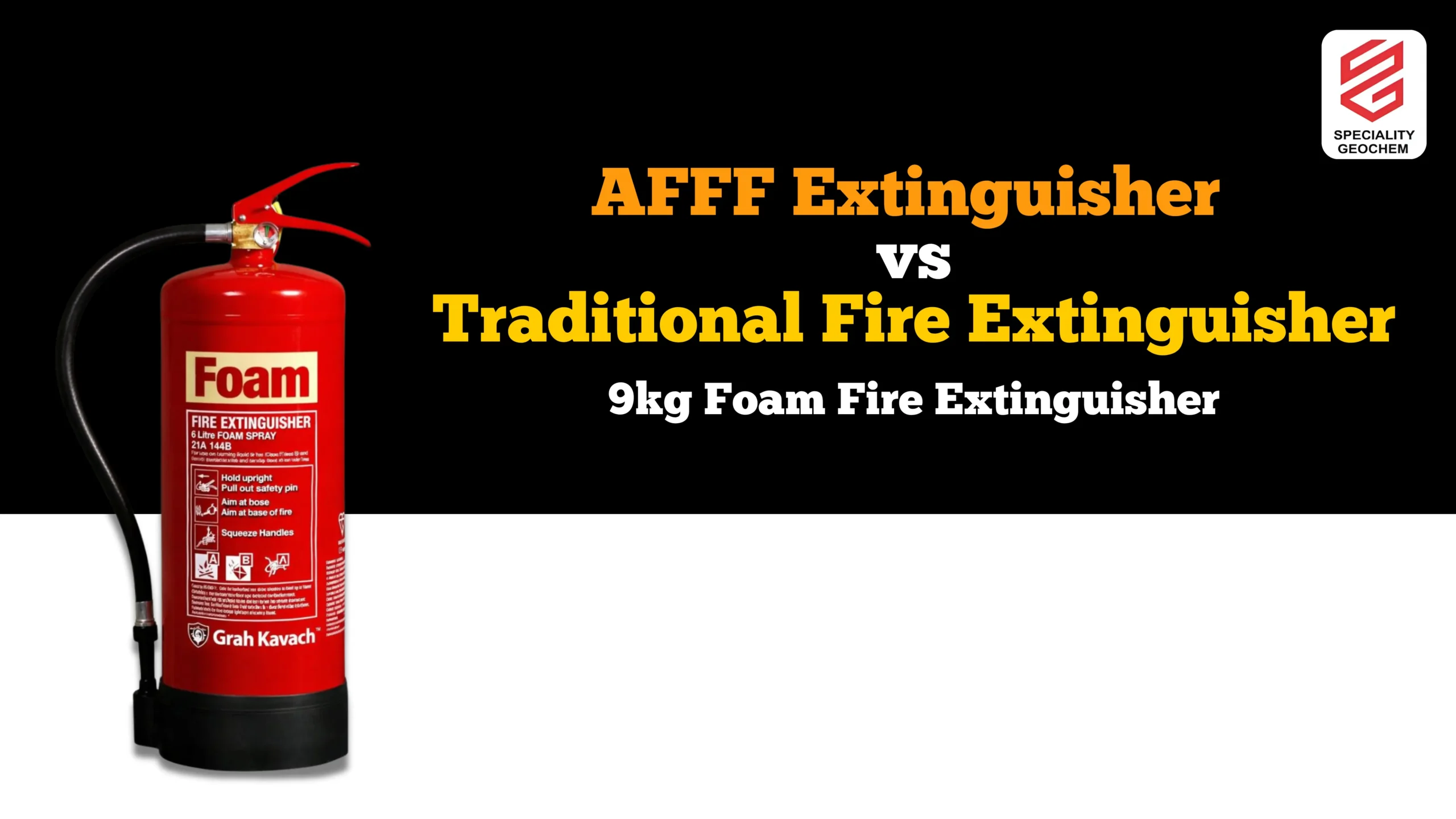
This is where fire fighting foam, particularly 9kg foam fire extinguishers and AFFF extinguishers, has become a critical part of modern fire safety strategies.
This guide is designed to give you a complete understanding of how these systems work, where they perform best, and how they compare with conventional fire extinguisher cylinders in real-world scenarios.
Understanding Fire Behavior: Why Some Fires Are Harder to Control
Before choosing an extinguisher, it’s important to understand that not all fires behave the same way.
Fires are generally classified based on the type of material involved. Solid materials such as wood, paper, and fabric fall under one category, while flammable liquids like petrol, diesel, oils, and solvents fall under another.
Solid fires tend to burn steadily and can often be controlled with basic extinguishing methods. Liquid fires, on the other hand, are far more dynamic. They spread quickly across surfaces, produce flammable vapors, and can reignite even after the visible flames are extinguished.
For example, when fuel catches fire, the flames you see are only part of the problem. The vapors released from the liquid continue to pose a risk. If these vapors are not controlled, the fire can return within seconds.
This is the exact gap that foam-based extinguishing systems are designed to address.
What is Fire Fighting Foam and How It Works
Fire fighting foam is not just a liquid sprayed onto flames. It is a carefully engineered extinguishing agent designed to control fires at multiple levels.
When discharged, foam spreads across the surface of the burning material and forms a stable blanket. This blanket performs three essential functions at the same time.
It cuts off the oxygen supply, which is necessary for combustion. It cools the surface of the fuel, reducing heat. And most importantly, it suppresses the release of flammable vapors.
This combination makes foam extremely effective for fires involving liquids, where traditional extinguishers often fail to provide complete control.
Instead of just putting out flames, foam stabilizes the entire fire environment.
Types of Foam Used in Fire Extinguishers
Not all foam extinguishers are the same. Understanding the different types helps in choosing the right solution.
Mechanical foam is one of the more basic types. It works by mixing air and water with a foaming agent to create a blanket over the fire. While effective for general use, it may not provide the fastest response in high-risk situations.
AFFF, or Aqueous Film Forming Foam, is a more advanced option. It forms a thin film over flammable liquids that spreads quickly and seals vapors effectively. This allows for faster fire suppression and significantly reduces the risk of reignition.
In modern fire safety systems, AFFF is often preferred because of its speed and efficiency.
What is a 9kg Foam Fire Extinguisher and Why It Matters
The size and capacity of an extinguisher play a crucial role in its effectiveness.
A 9kg foam fire extinguisher is designed to provide a balance between portability and performance. It contains enough extinguishing agent to handle medium to large fires while still being easy to operate during emergencies.
This size is particularly useful in commercial and industrial settings where fire risks are higher and require a longer discharge time.
A smaller extinguisher may run out too quickly, while a larger one may be difficult to handle. The 9kg variant strikes the right balance, making it one of the most commonly used foam extinguishers.
Key Benefits of Using a 9kg Foam Fire Extinguisher
One of the biggest advantages of a 9kg foam fire extinguisher is its extended discharge time. This allows users to control fires more effectively without needing multiple attempts.
It also provides better surface coverage. Since liquid fires spread quickly, the ability to cover a larger area is essential.
Another important benefit is the reduced risk of reignition. Because foam suppresses vapors, it prevents the fire from coming back after it has been extinguished.
In addition, foam leaves minimal residue compared to dry powder extinguishers, making cleanup easier and reducing damage to equipment.
AFFF Extinguishers: A Closer Look at Advanced Fire Protection
AFFF extinguishers represent a significant advancement in fire safety technology.
When discharged, AFFF creates a thin aqueous film that spreads rapidly across the surface of flammable liquids. This film acts as a barrier between the fuel and oxygen, effectively stopping the combustion process.
What makes AFFF unique is its speed. It spreads faster than traditional foam, allowing it to control fires more quickly.
It also provides superior vapor sealing, which is critical in preventing reignition. This makes AFFF extinguishers particularly effective in high-risk environments such as fuel stations, oil storage facilities, and chemical plants.
Traditional Fire Extinguisher Cylinders: Strengths and Limitations
Traditional fire extinguishers, including water, dry powder, and CO₂ types, are still widely used. Each has its own strengths.
Water extinguishers are effective for solid fires. Dry powder extinguishers are versatile and can be used for multiple fire classes. CO₂ extinguishers are useful for electrical fires.
However, they also come with limitations.
Water cannot be used on flammable liquids or electrical fires. Dry powder creates a cloud of residue that can damage machinery and reduce visibility. CO₂ lacks cooling, which increases the chances of the fire reigniting.
These limitations make traditional extinguishers less suitable for environments involving flammable liquids.
Foam vs Traditional Fire Extinguishers: A Practical Comparison
When comparing foam extinguishers with traditional cylinders, the difference becomes clear in real-world use.
Foam extinguishers control both flames and vapors, while traditional extinguishers often focus only on the flames.
Foam spreads across surfaces, providing better coverage. Traditional extinguishers require more precise targeting.
Foam reduces the chances of reignition, while traditional methods may require repeated application.
In environments where fire risks are complex, these differences can have a significant impact on safety outcomes.
Where 9kg Foam Fire Extinguishers Are Most Effective
9kg foam fire extinguishers are best suited for areas where flammable liquids are present.
This includes fuel storage areas, warehouses handling chemicals, paint industries, automobile workshops, and commercial kitchens.
In these environments, fires can spread quickly and require immediate, effective control. Foam extinguishers provide the level of reliability needed in such situations.
9kg Foam Fire Extinguisher Price: Understanding Cost vs Value
The price of a 9kg foam fire extinguisher depends on several factors, including build quality, certification, foam type, and manufacturer.
While foam extinguishers may have a higher upfront cost compared to traditional options, they offer better performance and reduce potential fire damage.
From a long-term perspective, investing in a more effective extinguisher can lead to significant cost savings by preventing larger losses.
How to Choose the Right Fire Extinguisher
Choosing the right extinguisher depends on the type of fire risk present in your environment.
If your space involves flammable liquids, foam or AFFF extinguishers are the most suitable choice.
If the risk is limited to solid materials, traditional extinguishers may still be effective.
It is also important to consider factors such as coverage area, ease of use, and compliance with safety standards.
Why Foam-Based Fire Protection is the Future
As industries evolve, fire risks are becoming more complex. The use of fuels, chemicals, and advanced materials requires more effective fire control methods.
Foam-based extinguishers provide a comprehensive solution by addressing both flames and vapors.
They offer faster response, better coverage, and improved safety outcomes. This is why more businesses are adopting foam and AFFF systems as a standard part of their fire safety strategy.
Conclusion
Fire safety is not just about having equipment, it’s about having the right equipment for the right risk.
9kg foam fire extinguishers and AFFF extinguishers provide a more advanced and reliable solution compared to traditional fire extinguisher cylinders, especially for flammable liquid fires.
Understanding these differences allows businesses and individuals to make better decisions and improve overall safety.
FAQs
What is a 9kg foam fire extinguisher used for?
It is used for Class A and Class B fires, especially those involving flammable liquids like petrol, diesel, and oils.
What is an AFFF extinguisher?
An AFFF extinguisher uses aqueous film forming foam to create a film over flammable liquids, suppressing fire and preventing reignition.
Is foam better than dry powder for fire safety?
Foam is more effective for liquid fires because it prevents reignition and causes less damage, while dry powder is more general-purpose.
What is the price of a 9kg foam fire extinguisher?
The price varies depending on quality, certification, and foam type, but it generally offers better long-term value.
Where should foam fire extinguishers be installed?
They should be installed in areas with flammable liquid risks such as fuel stations, warehouses, workshops, and industrial facilities.
Can foam extinguishers prevent fire from coming back?
Yes, especially AFFF extinguishers, as they seal vapors and reduce the chances of reignition.